

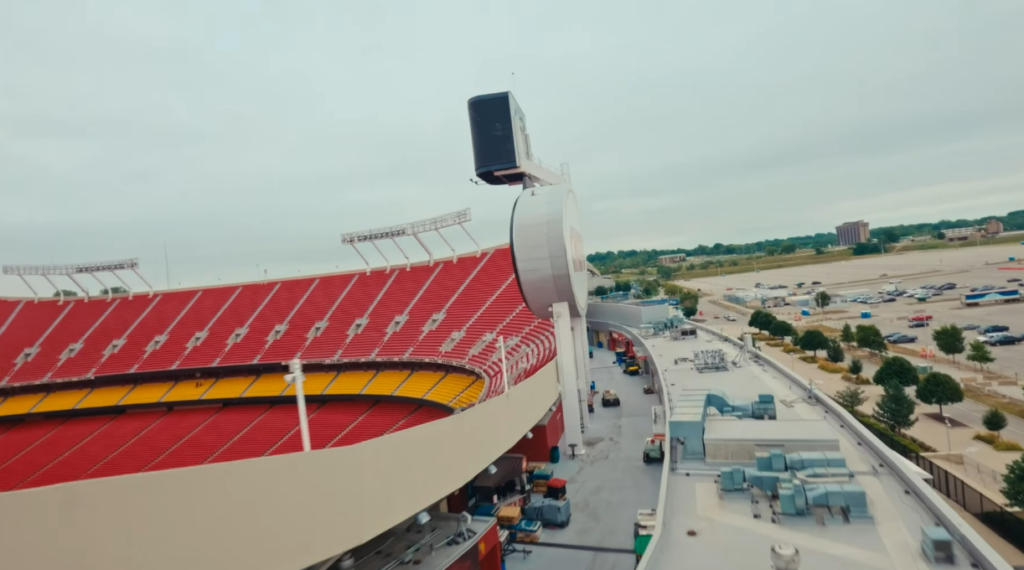
On a typical Chiefs game day, there’s a certain vibe to Arrowhead Stadium: the smell of tailgate smoke in the parking lot, the low rumble of 70,000 people finding their seats, and the feeling that you’re going to witness something significant for everyone nearby. With a worldwide audience and the kind of international color that the NFL playoffs don’t quite produce, the 2026 World Cup was meant to bring that same feeling to Kansas City. The realization that the seats they believed they purchased are not, in any meaningful sense, the seats FIFA delivered has greatly complicated the anticipation of that experience for many ticket holders.
FIFA’s reaction to the incident is all the more annoying because the mechanics of what transpired are not particularly complex. Fans were shown stadium maps with color-coded sections that indicated which price tier matched which area of the venue when the ticket lottery system went live in late 2025. The most costly public tier, Category 1, was seen occupying lower-level areas with clear views of the field. Based on those maps, fans made purchases, frequently spending hundreds or thousands of dollars, believing that premium pricing equated to premium positioning. FIFA then assigned exact seat numbers to tickets that had already been purchased in April 2026. Additionally, many Category 1 buyers found that the locations of the sections they were assigned didn’t match those on the original maps. When they made their purchase, some of them ended up in locations that were obviously designated as Category 2. A Kansas City supporter publicly stated that he had paid $520 for a Category 1 ticket and was given a spot behind the goal, which, for anyone who has watched soccer, entails spending about half the game staring at the back of a net.
FIFA’s response has been noteworthy for its blend of practical uselessness and technical accuracy. The original maps were “indicative category maps” that were released to “help fans understand where their seats could be located within a stadium,” according to a statement from the organization. They were “designed to provide guidance rather than the exact seat layout.” Legally speaking, this language is probably defendable. It appears that a disclaimer on FIFA’s own website stated that category locations were “approximate, not definitive and are subject to change.” Practically speaking, no one who paid $520 for a seat behind the goal wants to hear this explanation. Most consumers would not consider the difference between “guidance” and “the map that helped me decide how much money to spend” to be significant.
| Category | Details |
|---|---|
| Event | 2026 FIFA World Cup (North America) |
| Kansas City Venue | Arrowhead Stadium (referred to as “Kansas City Stadium” by FIFA), capacity ~67,000 |
| Total Tickets Sold (2026 WC) | Over 3 million |
| Ticket Categories | 4 price tiers (Category 1 = most expensive public tier) |
| Original Maps Published | October 2025 (shown to presale lottery winners) |
| Seat Assignments Issued | April 2026 |
| Core Complaint | Category 1 ticket holders placed in sections that were originally Category 2 on published maps |
| Kansas City Argentina vs. Algeria — Cat. 1 Price Increase | 87% increase since first release |
| Ecuador vs. Curaçao Ticket Increase | 22% since fall 2025 |
| VIP Ticket Price (Ecuador vs. Curaçao) | $2,850 per ticket |
| Pitchside Lounge Ticket Price | $3,350 per ticket |
| FIFA’s Response | Maps were “indicative” and meant to provide “guidance,” not exact seat locations |
| Local Organizing Committee | KC2026 (no oversight or influence over FIFA ticketing) |
| KC2026 Fan Festival | Free general admission — unlike most host cities |
| World Cup Shuttle Cost (KC) | $15 per person, round-trip |
| Other Complications | Trump travel ban; $15,000 entry bonds for visitors from 50 countries including Algeria and Tunisia |
| Algeria’s Base Camp | Lawrence, Kansas |
| Missouri National Guard Deployment | 110 members activated for World Cup security |
FIFA has increased ticket prices for almost every World Cup match since the initial release, which is a different but related annoyance that coexists with the seat assignment problem. Category 1 prices for Kansas City’s Argentina vs. Algeria match have increased by 87%. The Curaçao vs. Ecuador game is up 22%. The best seats actually went to the Pitchside Lounge and the VIP area, which are now priced at $3,350 and $2,850, respectively. It’s possible that the dynamic pricing model used by FIFA is completely typical for managing large-scale events. The term “bait-and-switch” was coined to describe the practice of selling seats with a single set of maps and then reserving the best locations for premium packages that went on sale later.
The local organizing committee for Kansas City, KC2026, has taken care to point out that it has no control over FIFA’s ticketing strategy, which is both technically correct and gives ticket holders nowhere to voice their grievances. The organization has correctly noted that shuttle costs to the stadium are more affordable than those in places like New York and Boston, and that Kansas City’s FIFA Fan Festival offers free general admission, which is comparatively uncommon among host cities. These are real advantages. The experience of a fan sitting behind a goal they paid Category 1 prices to avoid is not addressed.
It’s difficult to ignore the fact that FIFA is hosting this competition in a nation where ticket transparency standards are significantly higher than in the majority of the world. Regardless of their other characteristics, American sports fans have typically been conditioned by decades of Ticketmaster and StubHub to anticipate receiving what the map indicates. The organization’s framing of “indicative guidance” might withstand legal scrutiny. FIFA will be responding to the question of whether it survives the social media documentation of the discrepancy between what fans anticipated and what they received over the course of the next few months as tens of thousands of ticket holders post pictures of their behind-the-goal views.
