

When discussing technological innovation, Rolla, Missouri is rarely mentioned. It is located along I-44 in the Ozarks, a small city with about 20,000 residents that was primarily developed around Missouri University of Science and Technology and the constant flow of trucks and tourists traveling between Springfield and St. Louis. It’s the kind of place where a road project or hospital expansion is typically the big news. When a drone startup moves in, signs a lease with the university, and begins to discuss revolutionizing rural healthcare within a 100-mile radius, it’s important to pay attention.
One of the more significant advancements in drone logistics to occur in the American Midwest is Valkyrie UAS Solutions, which started test flights along the I-44 corridor in early April 2026. Transporting blood and tissue samples between facilities to expedite organ donation compatibility evaluations is the company’s primary goal, which is extremely urgent. In that process, every hour counts. A drone carrying 12 pounds of medical cargo while traveling at 100 miles per hour and 350 feet above the Ozarks is no longer a proof of concept. There are actual patients waiting at the other end of that functional system.
| Category | Details |
|---|---|
| Project Name | Missouri Rural Health Care Drone Project |
| Lead Company | Valkyrie UAS Solutions |
| Co-founder | Ty Harmon |
| Key Partners | Missouri University of Science & Technology (Missouri S&T), Mid-American Transplant |
| Base of Operations | Rolla, Missouri (Missouri S&T campus) |
| Test Corridor | I-44 between Springfield and St. Louis |
| Drone Specs | 8-foot wingspan, up to 100 mph, ~350 feet altitude, 12-pound payload capacity |
| Current Employees | 3 full-time; 2 pilots + 6 interns being hired |
| Immediate Mission | Transport blood and tissue samples for organ donation compatibility assessment |
| Expanded Future Uses | Cancer infusion delivery, rural medication transport, clinic support |
| Service Radius Planned | 100 miles from Rolla; supporting 172 rural health care clinics |
| Daily Operations Goal | 6 drones, 6 round trips each per day |
| FAA Target | 10,000 flight hours for expanded permissions |
| Funding Target | Federal Rural Health Transformation Program |
| City Administrator | Keith Riesberg, Rolla |
| Commercial Drone Market (2022–2029) | Projected to grow from $8B to $47B (Fortune Business Insights) |
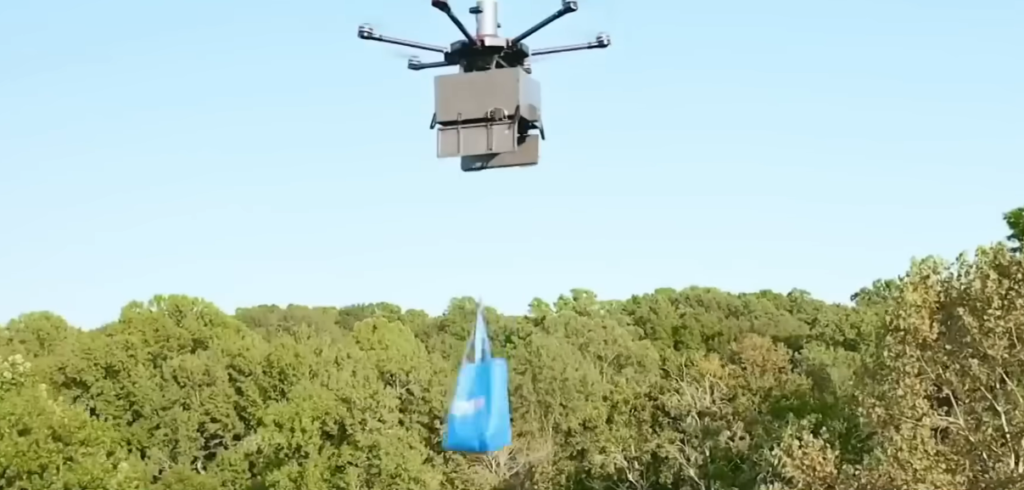
Valkyrie’s plans extend far beyond organ matching and blood draws. The longer vision has already been outlined by Lori Worthington, executive director of the Joplin Regional Alliance for Health Care: a cancer patient in a rural county who currently must travel two or three hours each way for infusion treatments would instead receive their medication by air, administered at a nearby clinic a few miles from home. For communities that have been neglected by distance for generations, this type of application makes the technology feel less like a logistics experiment and more like a true improvement in quality of life. This might not scale as smoothly as the optimists think. Variables that controlled tests won’t fully reveal include rural airspace, Ozark weather patterns, and the practical logistics of maintaining a drone fleet far from major service centers.
Amazon’s $2 billion drone program, Walmart’s delivery pilots, and the Irish company Manna, which averages deliveries in two minutes and forty seconds in Galway, are just a few examples of the larger drone logistics narrative that has been developing for years. According to studies, drone deliveries can be up to 90% less expensive than car-based courier services for some last-mile applications, and delivery vehicles emit 26–28 times more carbon dioxide than electric drones doing comparable tasks. Businesses throughout the global logistics chain have been investing heavily in the technology because of those numbers, assuming they hold true at scale. Analysts predict that by 2028, industry adoption and regulatory changes will significantly alleviate the labor shortages currently plaguing American last-mile delivery.
The particular terrain that Missouri is dealing with is what makes its case intriguing. Airspace coordination, public safety, noise, and privacy concerns are just a few of the issues that arise when urban drone delivery drops packages into crowded urban neighborhoods. Long distances, erratic cellular connectivity, limited emergency response in the event of an emergency, and rapidly changing weather all contribute to a completely different set of challenges for rural delivery. Some of Missouri’s least serviced medical terrain is traversed by the I-44 corridor between Springfield and St. Louis. Valkyrie’s goal of supporting 172 rural health clinics within a 100-mile radius of Rolla is a map of real need rather than a marketing statistic.
Keith Riesberg, the city administrator of Rolla, has presented the project from an economic perspective in addition to the healthcare one, discussing potential employment opportunities and the potential for the program’s drones to be produced in Rolla. That goal is noteworthy, but it’s also the most speculative aspect of the narrative. It’s a real operation with three full-time staff members and a hiring strategy for interns and pilots. Building a drone manufacturing facility in a small Missouri city is a more difficult and uncertain process that requires ongoing funding, regulatory approvals, and the kind of operational success that takes time to demonstrate.
There’s a sense that the next stage of drone logistics won’t be revealed from a Silicon Valley stage as this develops in a location that most technology coverage overlooks. In locations where the need is urgent, the distances are real, and the bureaucratic patience needed to accrue 10,000 FAA flight hours is less glamorous than the final headline, it will be quietly tested. Nobody anticipated that this story would begin in Rolla. Perhaps that’s precisely why it’s beginning there.
