

The image was fixed for a long time. A black belt indicated an adult who had spent years in a dojo getting hit, getting up, and returning on Tuesday. These adults typically had wrinkles around their eyes. The typical estimate was five to ten years. Every now and then, a story that jumbles that image appears, and these stories have been coming in more frequently lately.
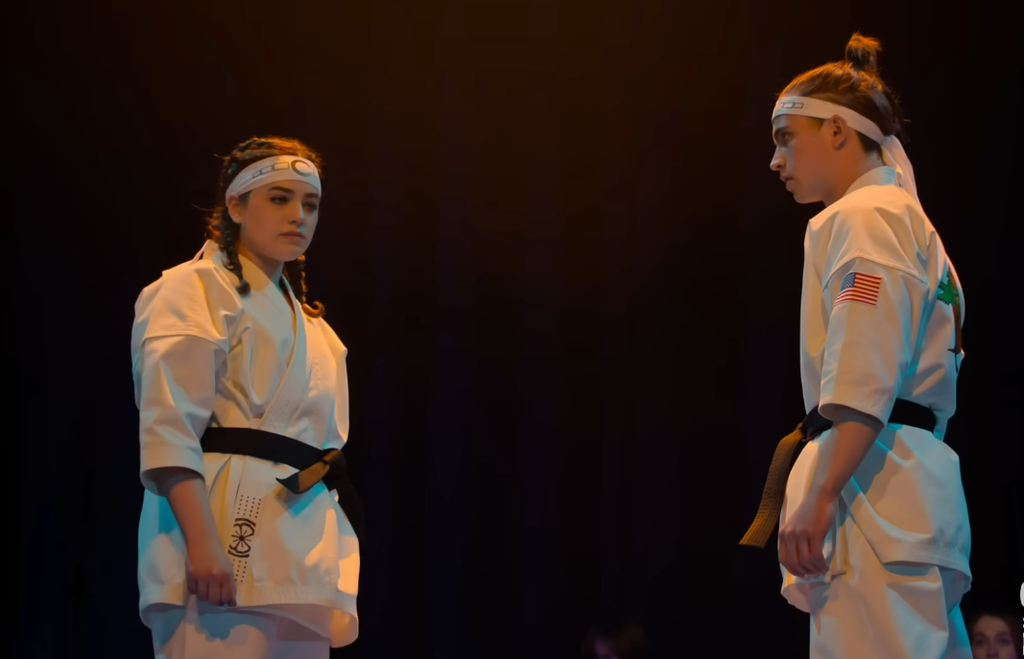
Consider Aaron Hoy, a young man from Runanga, New Zealand. He was reportedly the youngest person to obtain a black belt in Nin-Ka-Do, an art form whose name roughly translates to “fighting skill of mind and body,” at the age of eleven. Three hours were spent grading him. It began with him performing eighty push-ups on his knuckles and concluded with him simultaneously defending against three attackers. It’s pretty amazing, according to his father, who has taught the art for twenty-five years. Aaron was the only one of his three kids to stick with it.
Then there is Joshua Aguirre of Pennsylvania, who began at age four and, after a board-breaking exam and sparring, became one of the youngest individuals in the world to earn a fourth degree at age fourteen. According to reports, sixteen-year-old Kara Taylor became the youngest member of her association to earn a third degree in modern karate and kickboxing. These aren’t kids who were fortunate enough to try a few classes. Since many begin between the ages of two and six, they have spent about ten years on the mat.
It’s easy to interpret all of this as evidence of declining standards. Perhaps they are in some locations. There’s a more subdued explanation, though. Train steadily starting at five, and by fifteen you’ve just run out of hours. The mat time appears longer than the calendar.
Article Details Table
| Detail | Information |
|---|---|
| Main Subject | Teenage and pre-teen martial artists earning black belts earlier than traditional timelines |
| Traditional Timeline | Roughly five to ten years of training for a first-degree black belt |
| Aaron Hoy | 11-year-old from Runanga, New Zealand; reported youngest black belt in Nin-Ka-Do; three-hour grading with 80 knuckle push-ups and defending against three attackers |
| Joshua Aguirre | Pennsylvania; started at age four; reached fourth-degree black belt at 14 after a sparring and board-breaking exam |
| Kara Taylor | Age 16; third-degree black belt in modern karate and kickboxing; youngest in her association to reach that level |
| Edward Lee | 11-year-old from Pontefract, England; black belt after three years instead of the usual five; trains about two hours a week; joined his club’s Junior Leader Academy |
| Early Starts | Many young prodigies begin formal classes between ages two and six |
| Junior Black Belts | Some dojos use striped junior black belts for students under 13 to separate them from adult requirements |
| What Young Black Belts Say | The rank is the beginning of deeper mental and physical study, not the end |
| Skills Mentioned | Resilience, confidence, leadership, helping others train |
| Open Question | Whether schools will keep standards firm as younger students advance faster |
| Overall Takeaway | Early starts and years of mat time explain much of the trend, and the belt marks the start of a longer journey |
The junior black belt, which is frequently stripe-marked for pupils under thirteen, is another sensible workaround that some dojos have discovered. It keeps the standard from being diluted and distinguishes a young person’s accomplishment from the full adult requirements. That’s honest, and I like that. It essentially says, “You’ve earned this, and there’s more to come.”
In Pontefract, England, eleven-year-old Edward Lee received his black belt after three years, whereas five is the average. He works out for roughly two hours every week. The way he later described the rank really got my attention. He defined a black belt as a person who aspires to a more profound comprehension of the mental and physical principles of karate. He acknowledged that it was mentally and physically taxing. After that, he enrolled in the junior leadership academy at his club and began teaching other students, which doubled his training.
That appears to be what the better stories have in common. Nothing is stopped by the belt. These children discuss perseverance, self-assurance, and not giving up when things are difficult. It’s possible that this is the true shift in the definition of a black belt, which is now more indicative of a lengthy apprenticeship that starts early rather than an end goal for a select few.
It’s still unclear if the pace will continue and if each school will uphold its standards. A rank is only as significant as the number of people who are prepared to reject the wrong applicant. However, it’s difficult to ignore the sense that something is subtly changing in the dojo when a fourteen-year-old passes a master’s exam.
