

December 3, 2026 is the date. It is 1 p.m. Central time. The location is Fort Hood, Texas, the same base where former Army psychiatrist Nidal Hasan killed thirteen people and injured thirty-two more in November 2009.
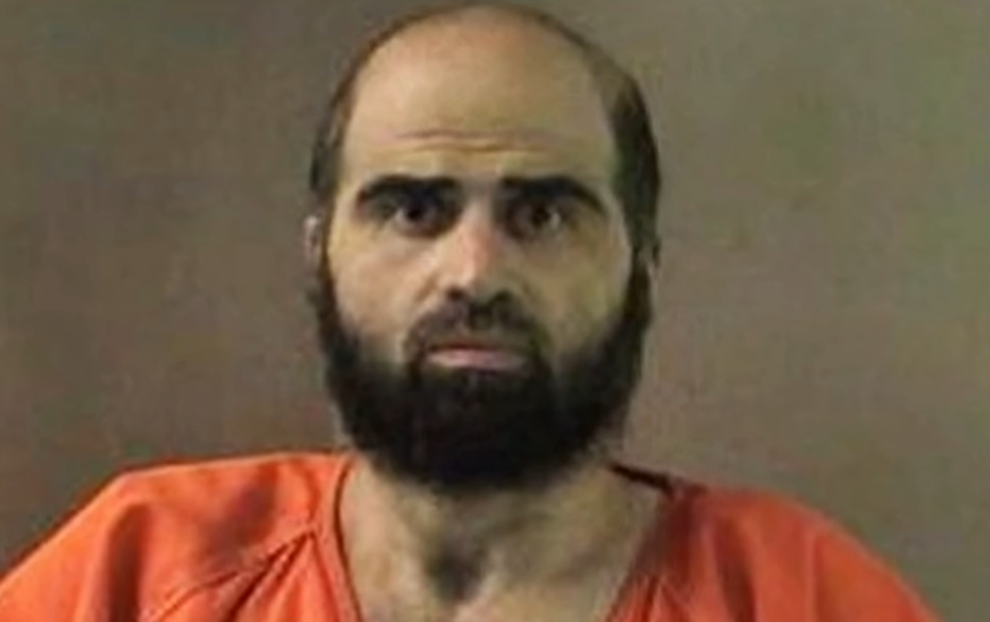
These specifics weren’t picked at random. According to Defense Secretary Pete Hegseth, the site was chosen because it was the site of the attack, and the time was chosen to roughly correspond with the start of the gunfire. It is a purposeful example of symmetry. Depending on who you ask, it can read as either justice or staging, and the opinions of those who ask are already divided.
| Detail | Information |
|---|---|
| Person to be executed | Nidal Hasan, former U.S. Army major and psychiatrist |
| Execution date | December 3, 2026 |
| Time | 1 p.m. Central |
| Location | Fort Hood, Texas |
| Method | Firing squad |
| Crime | 2009 Fort Hood shooting on November 5, 2009 |
| Casualties | 13 killed and 32 wounded |
| Approval | President Donald Trump approved the execution; Army rules set execution 60 to 150 days after approval |
| Current custody | Fort Leavenworth, Kansas |
| Historical significance | First U.S. military execution since 1961 and first by firing squad since 1945 |
| Original plan | Lethal injection in Terre Haute, Indiana, under a plan called “Operation Resolute Justice” |
| What changed the plan | The failed lethal injection of Christa Pike in Tennessee |
| Livestream | Announced by the Pentagon, with Trump’s approval but no final determination |
| Hegseth’s stated reason | Deterrence, and making sure “people are able to watch it” |
| Objections | UN warning of cruel, inhuman or degrading treatment; concerns about children viewing; platform rules against violent content |
| Attendance rules | Army Regulation 190-55 limits attendees and excludes anyone under 18 |
| Defense position | John Galligan called the plan “political theater” and said a habeas petition is a “distinct possibility” |
| Survivor view | Alonzo Lunsford supports the sentence but believes only victims and families should see it |
| Old Army firing squad rules | Eight riflemen, 15 paces, one to three rifles loaded with blanks; procedures date to 1959 |
| Vice President’s view | JD Vance doubted it would happen and said he would not watch |
According to Army regulations, an execution must be planned between sixty and one hundred and fifty days following presidential approval. This one lands close to the window’s early end. John Galligan, Hasan’s longtime civilian attorney, has expressed disapproval of the speed, claiming that officials are working to complete the project as quickly as possible. Galligan has also referred to the strategy as “political theater,” a term that indicates the defense’s stance.
Recalling how unusual this is is helpful. Should it proceed, it would be the first military execution since the hanging of an Army private in 1961. Additionally, it would be the first firing squad execution since 1945. The practical issues are significant for a service that hasn’t done this in many generations. The executioners are who? How are they instructed? The most comprehensive current regulations date back to 1959, according to an Army official, so a new procedure is being swiftly drafted.
The specificity of those outdated regulations is almost unsettling. One to three rifles were loaded with blanks so that no shooter could be certain, and eight riflemen were positioned fifteen paces away from the prisoner. A chaplain remains near until the very end. How much of that survives is unknown, particularly for a prisoner who was shot during his own attack and is now paralyzed and confined to a wheelchair.
It was a late change in methodology. At the federal prison complex in Terre Haute, Indiana, lethal injection was the foundation of internal planning. After Christa Pike’s execution in Tennessee went awry, the Army quickly changed its plan to use a firing squad. It’s difficult to ignore how much of this choice stems from an unsuccessful injection in a different state.
The livestream, which has grown to be the most noisy aspect of the narrative, comes next. The execution will be made public, according to the Pentagon. Although a final decision is still pending, President Trump has stated his approval. JD Vance, the vise president, has openly expressed his doubts about it happening and stated he wouldn’t watch. Broadcasting an execution could be considered cruel, inhuman, or degrading treatment, according to a warning from the UN. Legal challenges are frequently anticipated.
The practical challenges are also real. Army Regulation 190-55 prohibits anyone under the age of eighteen from attending a military execution. How a live online broadcast could prevent kids from watching or discovering the recording later is a question raised by critics. Additionally, major platforms like YouTube, TikTok, and Meta have policies prohibiting graphic violence, and Meta completely forbids livestreams of the death penalty. How and where the military would broadcast the stream is still unknown.
The survivors have some of the most insightful perspectives. Former sergeant Alonzo Lunsford, who was shot seven times, told the BBC that the penalty is appropriate for the crime. However, he believes that the general public shouldn’t watch. He would prefer that only the victims and their families see it, uncensored. That’s a measured stance, and it’s probably more prevalent than the yelling implies.
Nothing is settled legally. A habeas petition in federal court is a “distinct possibility,” according to Hasan’s attorneys, despite the Supreme Court’s decision last year not to review his conviction. That might cause everything to be delayed. On paper, December 3rd seems to be a set date, but in reality, it seems more flexible. As this plays out, it’s not unclear if Hasan will face consequences. It concerns how much of the process the nation will be required to observe and whether or not it will choose to.
