

You’ll likely get four names, two shrugs, and one person who wants to argue about rules when you ask ten people who the best martial artist is. That doesn’t make the question flawed. It’s the entire purpose.
Almost always, start with the name that appears first. Bruce Lee was born in 1940 in San Francisco, grew up in Hong Kong, and spent roughly five years learning Wing Chun from Yip Man. He never received any formal education other than that. Later, using concepts from boxing, fencing, and whatever else passed his testing, he created Jeet Kune Do. Tens of thousands of people flocked to his coffin when he passed away in 1973. He continues to be the go-to response on lists and in barbershop discussions even after fifty years.
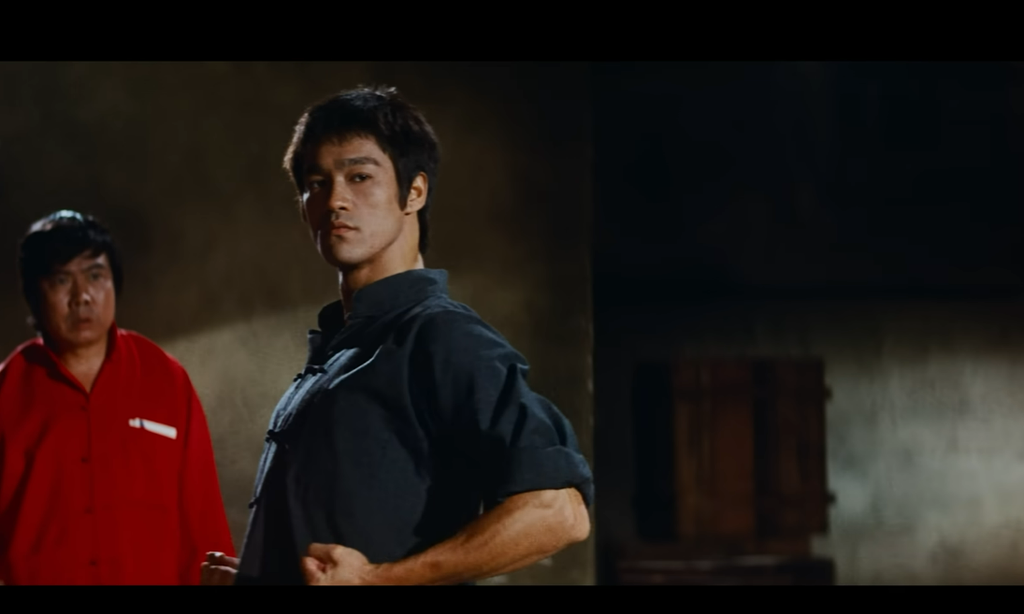
However, take a look at any of those lists’ comments. To be honest, it’s difficult to ignore the loud pushback. Critics point out that contemporary MMA fighters train against grapplers, wrestlers, and kickboxers from day one, while Lee was a movie star without any professional fights. A commentor likened it to a modern jet versus a Spitfire during a war. It’s a direct comparison that hurts because it’s not totally incorrect.
| Name | Category | Style / Contribution | Notable Detail |
|---|---|---|---|
| Bruce Lee | Cultural icon | Jeet Kune Do, Wing Chun foundation | Trained under Yip Man; died in 1973 |
| Jackie Chan | Action cinema | Acrobatic kung fu with stunt comedy | Fractured his skull filming Armour of God |
| Jet Li | Action cinema | Wushu | Trained at the Beijing Wushu Academy from age eight |
| Donnie Yen | Action cinema | Mixed kung fu and MMA-style choreography | Played Ip Man on screen |
| Jon Jones | Modern MMA | Mixed martial arts | UFC champion, often named in pound-for-pound debates |
| Khabib Nurmagomedov | Modern MMA | Wrestling-based MMA | Dominant UFC champion |
| Georges St-Pierre | Modern MMA | Mixed martial arts | Frequently listed among the all-time greats |
| Anderson Silva | Modern MMA | Striking-focused MMA | Long-reigning UFC champion |
| Ip Man | Traditional master | Wing Chun | Bruce Lee’s teacher |
| Helio Gracie | Traditional master | Brazilian Jiu-Jitsu | Built the art around leverage and technique |
| Jigoro Kano | Traditional master | Judo | Founder of judo |
| Gichin Funakoshi | Traditional master | Shotokan Karate | Brought karate from Okinawa to Japan |
Thus, different names are offered by the opposing camp. Khabib Nurmagomedov, Anderson Silva, Jon Jones, and Georges St-Pierre. These individuals engaged in high-level combat with referees, records, and bright lights. You can review their resumes. The idea that a number one should be something you can truly count gives you some comfort.
However, there is a catch. The fighters who prevail in them are shaped by the cage rules. The best MMA fighter is the best at MMA because of weight classes, prohibited strikes, and round limits. That’s a significant distinction; it’s similar to declaring the fastest sprinter to be the greatest athlete. He might be. It’s also possible that no one has yet posed the appropriate query.
The older school of thought, which receives less attention on the internet, is another. Jigoro Kano transformed jujutsu into judo and established a global educational system. Karate was brought to Japan by Gichin Funakoshi from Okinawa. Small by most measures, Helio Gracie transformed Brazilian Jiu-Jitsu by emphasizing patience and leverage. Their impact is not quantified by box office receipts or belts. Kids in slightly oversized uniforms bow before stepping onto the mat in any packed dojo on a weeknight.
The image is messier when it’s on film. While filming Armor of God in 1986, Jackie Chan suffered multiple injuries from performing his own stunts, including a fractured skull. Donnie Yen has spent decades blending styles on screen, and Jet Li rose through the Beijing wushu system. Do they prioritize martial arts over entertainment? Or the other way around? Most likely both, which is precisely why they distort the rankings.
It’s difficult to ignore the fact that those who argue the loudest typically define “best” in a way that coincidentally benefits their own hero. There are four distinct things: teaching legacy, cultural reach, real fighting ability, and sheer screen magnetism. It is possible for one person to lead one category and follow the other three.
Bruce Lee is arguably the most truthful response to the question “most influential” if only one name is needed. The current UFC names make a stronger case for “most proven in competition.” Even though they aren’t featured on posters, there is a case to be made for the quiet founders of today’s schools.
Perhaps the question of who is at the top isn’t the best one. You’re measuring it. The argument becomes much shorter after that is resolved. It remains to be seen if it becomes any less enjoyable.
