

If you ask a group of martial arts enthusiasts who is better than Bruce Lee, you will get a debate rather than a response. Chuck Norris will be named by someone. Jon Jones will be mentioned by another, and Jackie Chan by a third. The fact that all three are able to defend their choice shows how ambiguous the term “greater” actually is.
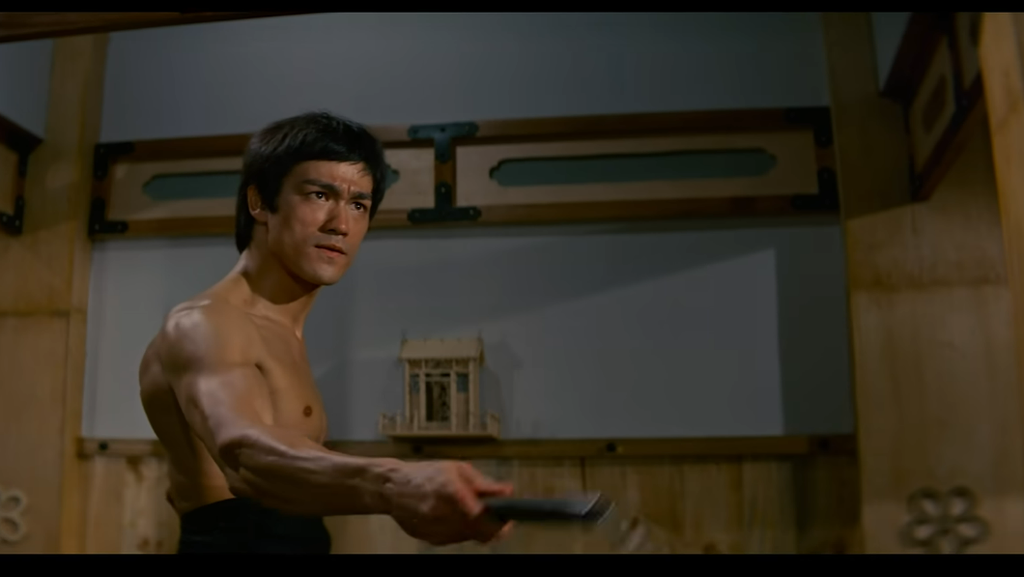
Since fighting is where most of the heat is found, start there. Lee never participated in a professional fight. Beyond a few minutes of sparring, there is no ring footage, no tournament bracket, and no record to review. His reputation as a fighter is based on anecdotes, many of which are from students and friends. They are still true despite this. It does render them unverifiable, and that’s precisely where contemporary MMA fans set up shop.
| Detail | Information |
|---|---|
| Main subject | Bruce Lee (born Lee Jun Fan, November 27, 1940, San Francisco) |
| Died | July 20, 1973, Hong Kong, aged 32; official cause: cerebral edema linked to a reaction to a headache tablet |
| Martial arts background | About five years of Wing Chun under Yip Man; founder of Jeet Kune Do |
| Key films | The Big Boss (1971), Fist of Fury (1972), The Way of the Dragon (1972), Enter the Dragon (1973) |
| Professional fight record | None; reputation rests on training, sparring accounts and film |
| Reported weight | Roughly 130 to 140 pounds |
| Funeral turnout | Nearly 30,000 fans in Hong Kong |
| Chuck Norris | Retired 1974 as undefeated professional full-contact middleweight champion; reported record 65 wins, 5 losses; co-starred with Lee in The Way of the Dragon |
| Benny Urquidez | Full-contact karate champion; reported record of 200+ wins with no losses |
| Jet Li | Five-time Chinese national wushu champion; film career in Hong Kong, China and Hollywood |
| Jackie Chan | Action-comedy pioneer known for performing his own stunts; appeared in minor roles in two Lee films |
| Donnie Yen | Actor and choreographer; played Lee’s teacher in the Ip Man series |
| Sammo Hung | Actor, director and choreographer; worked with both Lee and Chan |
| Modern MMA names often cited | Anderson Silva, Georges St-Pierre, Jon Jones, Khabib Nurmagomedov |
| Fighting argument for rivals | Verified competition records, cross-training in striking and grappling, weight and size advantages |
| Argument for Lee | Cultural impact, popularizing martial arts worldwide, early advocate of mixing styles |
| Debate’s core issue | “Greater” can mean fighter, filmmaker or icon, and the answer changes with each |
They make a compelling case. Fighters like Jon Jones, Georges St-Pierre, Khabib Nurmagomedov, and Anderson Silva rose to prominence through legitimate, frequently violent competition. Together, they practiced striking, jiu-jitsu, and wrestling—a system that hardly existed in 1970. Lee weighed between 130 and 140 pounds as well. Size is more important than philosophy in an open bout with a skilled heavyweight.
Then there’s Chuck Norris, the name most frequently mentioned by those who favor records over legends. After losing his first three competitions, Norris was all but unbeatable. With a reported record of 65 victories and 5 defeats, he was the undefeated professional full-contact middleweight champion when he retired in 1974. In the Colosseum scene of The Way of the Dragon, Lee and Norris did share a screen, and the fight is still one of the most reenacted scenes in action movies. The rivalry seems more like a fan fantasy than a genuine conflict because Norris has long treated Lee with respect.
Others approach it in different ways. In full-contact karate, Benny Urquidez, also known as “The Jet,” claimed over 200 victories and no defeats. As a young boy, Jet Li won five national wushu titles in China. They are both very strong. Neither was as significant a cultural force in the world as Lee was.
The pure-fighter argument usually ignores that point. When Lee passed away in July 1973 at the age of 32, roughly 30,000 people flocked to Hong Kong to see his coffin. Martial arts schools began to open in suburban strip malls on two continents within a few years. Hollywood viewed kung fu as a novelty prior to Enter the Dragon. Following that, studios sought to acquire the genre. It’s difficult to think of another athlete whose impact was so much greater than his resume.
The fight in film is more equitable. With his comedic timing, stunts, and willingness to fall twenty feet without a pad, Jackie Chan may have done more with the camera than anyone else. He continued to make films for decades. Lee arrived first and opened the door, according to Chan himself. Sammo Hung and Donnie Yen also merit a spot here for their longevity and choreography. Lee only produced a few movies. Yen, Hung, and Chan created massive bodies of work.
What does that mean for us? Most likely a split decision. Many people are better than Lee as a verified fighter, and it doesn’t help him to act otherwise. Some competitors have a strong case as filmmakers or professionals. No one has undoubtedly surpassed him as a cultural icon who transformed the way the world viewed martial arts.
It’s difficult to ignore the fact that the debate itself serves as evidence. Nobody disputes who is superior to the majority of the fighters on those lists fifty years later. They quarrel over Lee. That kind of endurance is a response in and of itself, regardless of what else “greater” may mean.
