

A girl and a radio on a beach in California are where it all begins. That is the real, unglamorous source of one of the longest-running feuds in popular culture. When a new kid from New Jersey reached down and picked up the pieces of Ali Mills‘ broken radio in the summer of 1984, Johnny Lawrence and Mills had already broken up. Daniel LaRusso was that child. And Johnny had a target from that point on.
The explanation on the surface is fairly straightforward. Johnny was the current All Valley Karate Champion, the school’s alpha, the attractive boy with the hip pals, and the girlfriend. Daniel then showed up and ruined the whole thing. At a beach party, he punched Johnny in the nose. According to Johnny, a man with Daniel’s scant training had no right to land on a karate champion. At the Halloween dance, he used a water hose to soak him. Then, in the All Valley Tournament finals, he humiliatingly defeated him with a single crane kick that Johnny was unprepared for. From Johnny’s perspective, in just one academic year, this new kid had completely destroyed his life.
However, the layer that followed was more intriguing. Daniel received congratulations from Johnny during the competition. For a split second, it appeared as though the whole thing might be over when he gave him the trophy and praised him. Of course it wasn’t. Decades of resentment ensued, and the causes of that resentment reveal more about Johnny than Daniel ever could.
Johnny is living in a dilapidated apartment, having financial difficulties, and trapped in a never-ending cycle of his own worst memories by the time Cobra Kai picks up the story. Daniel, on the other hand, is doing well overall, managing a chain of auto dealerships, and residing in a lovely home in the Valley. The fact that Daniel left their rivalry and built a life while Johnny left and was unable to build anything at all may be the true wound, rather than the crane kick or even Ali Mills.
Early on in Cobra Kai, Johnny tells Miguel, his first pupil, what happened in The Karate Kid. If you’ve seen the original film, you’ll find his version to be genuinely humorous because it’s clearly filtered through decades of resentment.
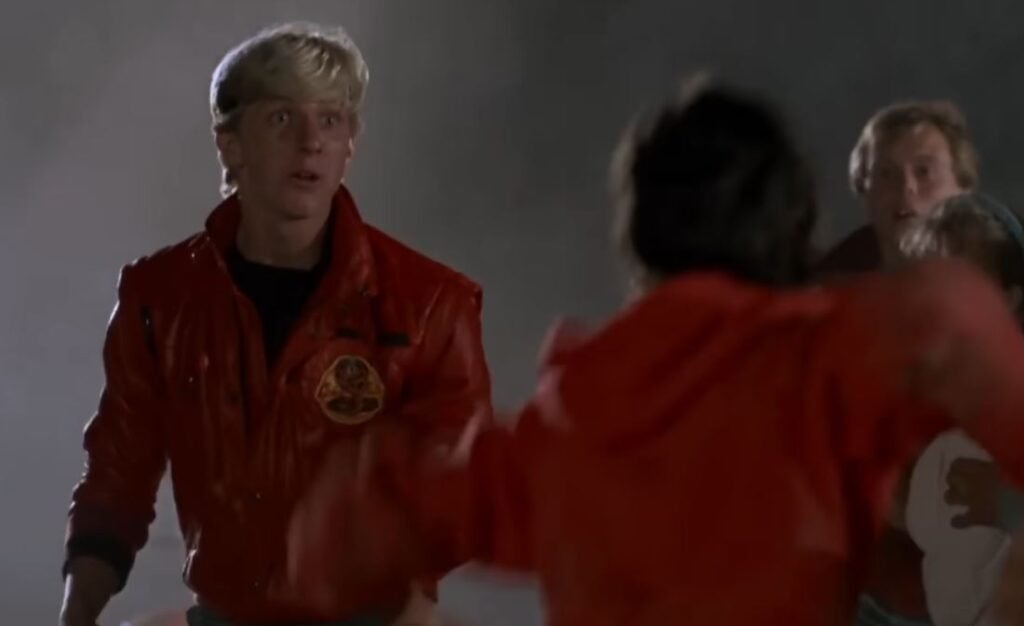
According to Johnny, Daniel was the one who repeatedly pursued him, the aggressor, and the instigator. The problem is that you can practically see how he got there when you watch it. It’s not because it’s true, but rather because it’s precisely the kind of narrative that people tell themselves when they need someone else to take responsibility for the outcome.
That’s the essence of it. Daniel was never the main target of Johnny’s animosity. It told the story of a man who lost the one relationship that was important to him, had a difficult upbringing, was brought up on Kreese’s philosophy of dominance and mercy, and never learned how to deal with any of it. Daniel became the explanation because he was available and had prevailed. It’s the kind of psychological shorthand that, on the outside, seems ridiculous but, on the inside, makes perfect sense.
It’s important to note that Cobra Kai did a good job of refusing to completely disprove Johnny. In the show, Daniel does act badly. He occasionally acts petty and is prepared to use his resources to sabotage Johnny’s new dojo. He also harbors more resentment than his success should necessitate. The rivalry was never as tidy as it appeared in the first film. They both had something to answer for.
Even so, it’s difficult to avoid feeling a little depressed as Johnny Lawrence tries to justify his hatred of a man he hasn’t spoken to in thirty years. The rage is genuine. His justifications are not as compelling. Beneath it all, there’s probably just a young man who lost his girlfriend, was strangled by his mentor, and never really knew what to do.
