

In Part II of The Karate Kid, Kumiko tells Daniel about the ruins of King Sho Hashi’s old castle as she points toward the ocean. It looks like the coast is dramatic, windswept, and old. It says Okinawa on it. Hawaii is, in fact, there. In particular, the rocky lookout point near Halona Blowhole on the southeast coast of Oahu, which is about 25 minutes by car from Waikiki.
| Detail | Information |
|---|---|
| Film Title | The Karate Kid Part II |
| Release Year | 1986 |
| Director | John G. Avildsen |
| Writer | Robert Mark Kamen |
| Stars | Ralph Macchio, Pat Morita, Yuji Okumoto, Tamlyn Tomita |
| Set Location (Story) | Okinawa, Japan |
| Primary Filming Location | Oahu, Hawaii, USA |
| Specific Hawaii Locations | Kaneohe (Tomi Village set), Kualoa Ranch, Halona Blowhole |
| California Locations | CSUN Northridge, Canoga Park, Warner Brothers Studios Burbank |
| Filming Period | September – December 1985 |
| Box Office Gross | $115 million+ (North America) |
| Production Budget | $12.5 million (estimated) |
| Why Hawaii Was Chosen | Similar climate to Japan, large Okinawan community, US soil logistics |
| Tomi Village | Fictional; set built in Kaneohe, HI near Kahalu’u Pond |
| Mr. Miyagi’s House | 20924 Gault St, Canoga Park, CA (since demolished) |
| Castle Scene Location | Halona Blowhole coastline, Honolulu, HI |
| Notable Song | “Glory of Love” by Peter Cetera |
That’s the movie’s main quiet trick. The fishing village, the lookouts along the coast, and the green mountain backgrounds were all filmed on the island of Oahu in Hawaii. The movie was shot in Los Angeles for the first few scenes and on Oahu for most of what people thought was Japan. Production began in September 1985 and ended in December.
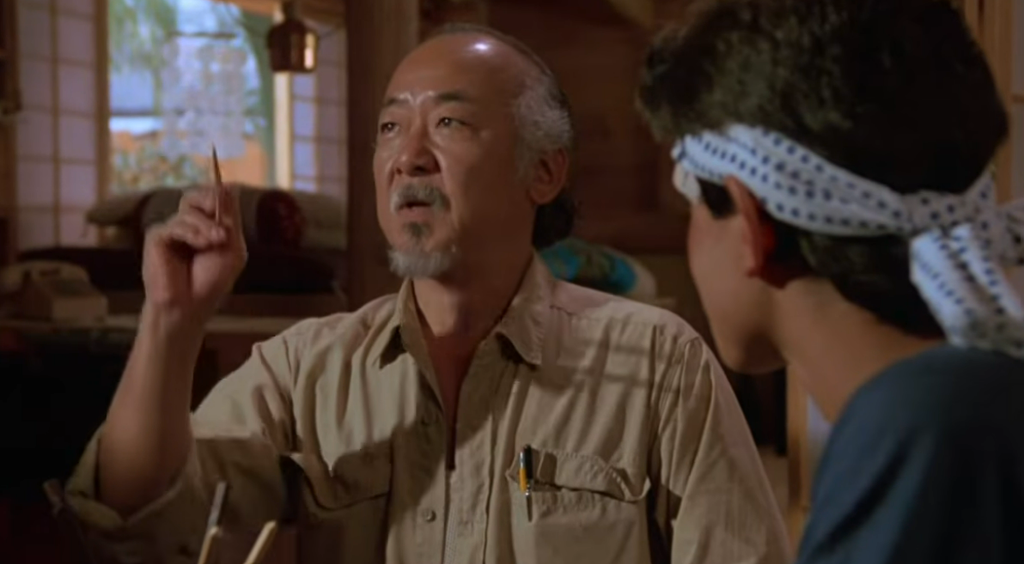
In more than one way, the choice made sense. Japan’s weather is close enough to Oahu’s that it works visually. There is also a large Okinawan-American community there, one of the biggest outside of Japan. This helped with casting, cultural references, and giving the show a sense of realism. And maybe most importantly, filming in the US made a lot of things easier, like getting permits, finding crew, equipment, and insurance. Going to real Japan would have made things more difficult and cost more than they needed to be.
There was no map of the made-up village of Tomi where Mr. Miyagi goes to see his dying father. The crew put it together. They built the set in Kaneohe, which is on the windward side of Oahu. They put up fake houses and crops to make it look like it was in rural Okinawa. The view across Kahalu’u Pond was the background. You probably wouldn’t have known you were in Hawaii if you weren’t told. They were able to do that because the warm light and lush green hills look the same from thousands of miles away.
The home of Mr. Miyagi’s father was on Kualoa Ranch, which is also in Kaneohe. Since then, Jurassic Park, Lost, and many other movies and TV shows have used the ranch, making it something of a pilgrimage site for movie fans. It worked well for those projects because it had wide views and a tropical feel. It also worked well for this one. That’s where the scene where Miyagi and Yukie, his ex-lover, meet again was filmed. There is a soft, slightly sad mood in the air, and the setting adds to that.
Back in California, California State University Northridge was used to film the opening sequence, which goes straight to the end of the first movie. There in the parking lot is where John Kreese turns on his own students after losing the tournament, and Mr. Miyagi calms things down without throwing a single punch. At the airport, Daniel talks Miyagi into letting him come along. This scene was filmed near LAX at the Flight Path Museum. We got a quick look at Mr. Miyagi’s house, which was at 20924 Gault Street in Canoga Park, which is a residential street that no longer has the building because the house has been torn down. Some interior scenes, like shots of Sato’s dojo, were shot on soundstages at Burbank’s Warner Brothers Studios.
How well the whole plan worked is what’s interesting about it. In 1986, most people who saw the show believed the illusion. When I watch the movie again, I have to really pay attention to find the clues. There are certain plants, lights, and shapes on the Hawaiian and Japanese coastlines that make them stand out. The production didn’t try to hide the differences between the geographies; instead, it focused on the things that were similar.
Over $115 million was made at the box office, making it one of the biggest hits of 1986. Not bad for a sequel that started filming only ten days after the first movie came out. No matter what the critics said about the plot, people still went. They thought they were keeping an eye on Okinawa.
For many viewers, especially those who saw the movie as a child, the real places may not have been very important. It felt real in Tomi Village. The castle ruins looked very old. The windswept coast didn’t feel like it was in New Jersey at all. Those goals were met by the locations, even though they were an hour’s drive from Honolulu.
