

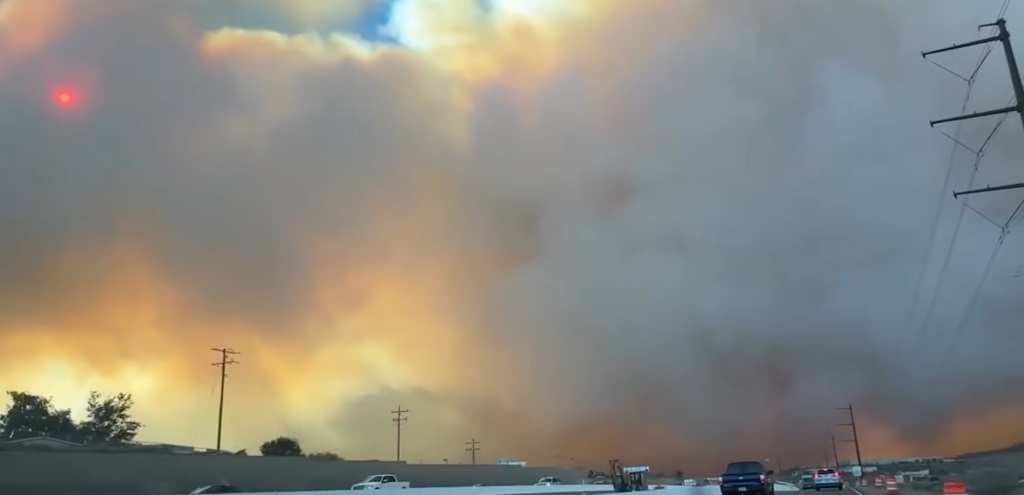
Things got scary before the smoke showed up. On Saturday, the Hawk fire started northwest of Reno, Nevada’s second-largest city. In just two days, it burned through more than 15,000 acres, changing the landscape from how it looked a week ago. The weekend wasn’t what anyone had planned for tens of thousands of people.
It was “go-now” time for about 23,000 people as of Monday afternoon. Another 40,000 people were in the uncomfortable middle, reading the “get-set” warning. This is the part where you pack your bags, watch the news, and wait. That waiting makes you feel a certain kind of fear. You’re not lost yet, but you’re also not safe.
Chief of the Truckee Meadows Fire Protection District, Richard Edwards, confirmed that at least 32 homes had been destroyed and six more had been damaged. He also said that those numbers were likely to go up as damage assessment teams continued to work through the affected areas. Four people, including three firefighters, were hurt. Canine search teams were sent to the burn areas to look for bodies, but they didn’t find any. This was a small bit of good news in a very bad situation.
Containment reached 27% by Monday afternoon. The southern edge of Somerset and the area east of US Route 395, a major highway that had to be shut down completely, saw the most progress. There were more than 900 people sent to help with the fire. The hotspots were worked on by helicopters. As the fire got worse around the edges, scouts took water from Stampede Reservoir and dropped it there. The terrain is not making things easier, and it is still not clear when full containment might happen.
NV Energy took emergency steps that caused about 10,000 people in Northern Nevada to lose power. It hurt more than 100 power poles. Another 250 people lost their gas service because repairs to the infrastructure are expected to take a long time. On Sunday, Gov. Joe Lombardo declared a state of emergency in Washoe County. By Monday, FEMA Region 9 had given permission for federal funds to help put out the fire. This showed that the state could no longer handle it quietly on its own.
One thing that stood out from the briefings was that firefighters had to tell people in public to stop flying drones near areas where they were fighting fires. Matt Zumstein of the U.S. Forest Service made it clear: drone interference forces aircraft to land, which slows down suppression. A strange new problem has been added to an operation that was already hard.
Monday was the first day of fall classes at the University of Nevada, Reno, even though some backyards could see flames. Cameron Cobbin, a senior and president of his fraternity, spent the weekend helping his family leave. One block away from the danger zone is where he lives. He said that only about half of the people who were supposed to be in his morning class showed up. That was his word: “It’s been really stressful.” “But I’m honestly just trying to keep going.” There’s something deeply admirable and tiring about that.
Another senior, Janessa Arretche, was evacuated to Truckee, California, for a short time on Saturday before going back home. She talked about how students in the dorms had become confused between Peavine Peak (the fire area) and Peavine Dorms on campus, which had led to needless panic. When people are already stressed, small misunderstandings can spread quickly.
When I talk to people who are involved with the university, I hear that the campus itself became a kind of anchor. As senior in journalism Madaleine Gomes put it, being with other people made it feel less lonely and scary. Her teachers had already been giving materials to students who needed them. The university kept its back-to-school events going, with music, community events, and everything else. That choice might have been more important than it seems. It’s important to have a familiar place to gather in a city that is watching its edges burn.
The Hawk fire has not been put out yet. The numbers are still changing, the damage assessments are still going on, and a lot of people in Reno are still waiting and watching. Even with everything going on, it’s hard not to notice how much people are still trying to keep their normal lives going—going to class, checking on neighbors, and running events. It’s the texture of what’s happening on the ground, whether that shows resilience or just the lack of any other choice.
