

Observing a well-known grocery store chain begin to close has a subtle significance. Not dramatically, not in the style of a crisis headline, but methodically, place by place, like a business that has taken an honest look at itself and determined that something needs to change. Organỹ Soriana seems to be in that situation at the moment.
As part of a larger reorganization of its business, the massive Mexican retailer has announced that it will close 20 locations nationwide in 2026. In the first quarter of this year, eight of those closures have already occurred with comparatively little fanfare. The company hasn’t made a full public list of the locations that will be impacted, but the remaining 12 are anticipated to follow before the year is out.
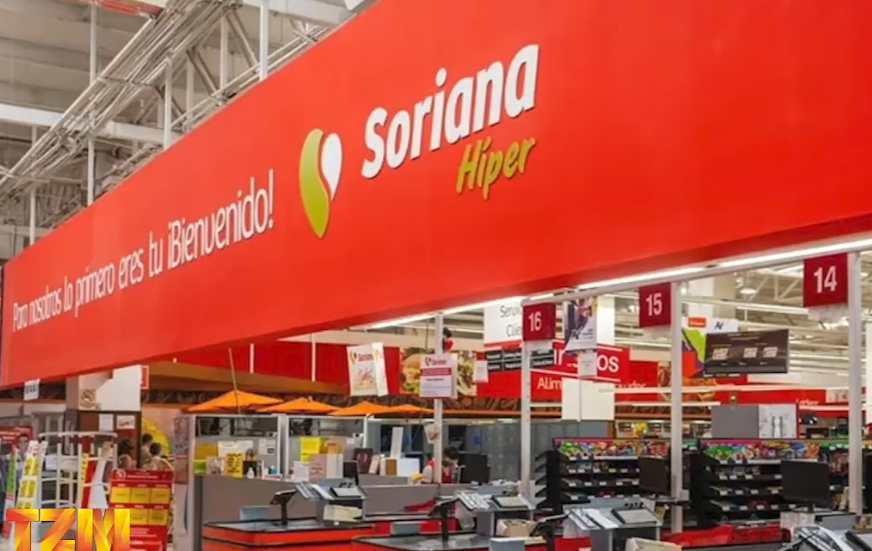
As of right now, only a few particular stores are involved. One of the named closures was Soriana Plaza Las Flores in Coacalco, State of Mexico, which is reportedly scheduled to close on August 31. It was also confirmed that Soriana Híper Montes Berneses lived in San Nicolás de los Garza, Nuevo León. Soriana Súper Plaza Guadalupe in Zapopan, Jalisco; Soriana Híper Torreón Nuevo in Morelia, Michoacán; Soriana Plaza La Sierra in Chihuahua; and Soriana San Javier in Pachuca, Hidalgo are a few other places that have been made public in reports. It’s important to note that some of these names have appeared in news stories without complete official confirmation, so consumers in those regions should confirm first before assuming anything.
In addition to the actual closures, the company intends to reduce the floor area of about 60 more stores, mostly its larger hypermercado format locations. That particular detail reveals an intriguing trend in consumer behavior. At least in some parts of Mexico, the era of the massive, one-stop shop appears to be fading. Individuals are shopping in different ways. more focused, quicker, and closer. Retail markets far outside of Mexico’s borders exhibit this pattern.
There is more to Soriana’s response to that change than just a reduction in square footage. Additionally, the company wants to bolster its financial services division, indicating that it envisions a time when the store will be only one aspect of a larger customer relationship. At this point, it’s genuinely unclear if that pivot will succeed. Soriana would be competing with established players in the highly competitive retail financial services market.
It’s difficult to ignore some parallels to the experiences of other big-box stores around the world. Walmart, Carrefour, and other retailers have all experienced variations of this: the challenging realization that size isn’t always a benefit. Soriana is not crumbling. It is important to emphasize that point. The closures seem to be an intentional, if uncomfortable, attempt to right-size operations before issues worsen rather than an indication of a company in freefall.
However, restructuring announcements don’t always seem strategic to customers who have been shopping at these locations for years and to employees at the affected stores. They are intimate. A neighborhood is changing when a store closes. It’s a broken routine.
In a market where traditional supermarket traffic is being eaten by e-commerce and convenience formats, Soriana seems to be betting that it can emerge from this phase smaller but steadier—more agile. It remains to be seen if the 60 stores that are being trimmed will perform better after they are reduced in size or if more closures occur in the years that follow. Even though it keeps customers and employees in the dark, the company is currently keeping quiet about the full extent of its plans, which may make sense.
It’s obvious that Mexican retail is going through a real transition, and Soriana is one of the most obvious instances of this happening right now.
