

There’s something almost strange about how simple things are right now. Monday, August 10, 2026, State Secretary Prasetyo Hadi brought a letter from the president to the Parliament Complex in Senayan, Jakarta, and gave it to the House of Representatives. That letter had a list of names for leadership roles at Bank Indonesia. There was only one name for the top job, which was governor. Only one. Yes or no. “The name is singular, yes, one name,” Prasetyo told the media waiting outside. It is very uncommon for the presidency of Indonesia to send such a clear message from the top. The market, which was still tense from months of not knowing what would happen at the top of BI, seemed to calm down a bit.
In her current job as Acting Governor of Bank Indonesia, Destry took over from someone who had been Senior Deputy Governor for two terms, from 2019 to 2024 and then again from 2024 to 2029. In the years before she worked at the central bank, she was Chief Economist at PT Bank Mandiri and Mandiri Sekuritas. She also worked as Special Staff to the Minister of Finance and on the Board of Commissioners at LPS. People who work in private finance, capital markets, and state institutions build their careers in this way. That width is important. This is one reason why economists and analysts don’t seem as worried about this change as they might be.
Professor Rahma Gafmi of Airlangga University put it simply: the market sees Destry as an insider who knows a lot about the tools used in the financial market. He says that speculative pressure on the rupiah can be eased more quickly if the person in charge of BI can talk clearly—not with vague, reassuring statements, but with solid, measured signals that traders trust. People in the market know there is a difference.
In their own way, the numbers that Monday told us a lot. The value of the rupiah rose by 0.66 percent on the day, ending the day at Rp 17,795 per US dollar. Still, the value of the currency has dropped about 6.4% since the beginning of the year. This is a reminder that whoever becomes governor will face real and stubborn problems. At the end of the day, the Jakarta Composite Index was down 0.69 percent. Investors were not going crazy. But they weren’t happy either. Someone or something that keeps coming up in conversations with business people and analysts is “wait-and-see.” Formal certainty is what the market wants, but it’s not quite there yet.
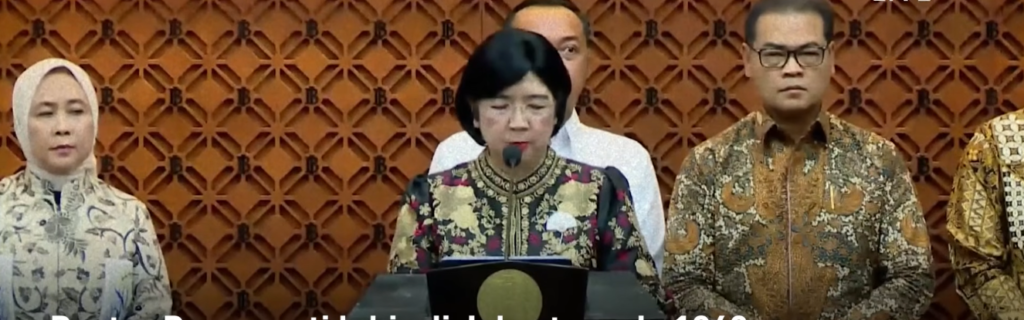
Before making an announcement in plenary, Destry will go thru a process called “fit and proper” before Commission XI of the House of Representatives. This process usually takes one to two weeks. It’s just a formality, but it’s not nothing. Even when things seem to be going smoothly, parliamentary dynamics can cause problems. Most people who are watching think that the confirmation will go smoothly, but that hope itself is tense.
The idea of continuity seems to hold confidence together better than anything else. Shinta W. Kamdani of the Indonesian Employers Association put it very clearly: business leaders want consistent policy, stable communication with markets, low inflation, and a fairly stable exchange rate in the first few months of the new governor’s term. These are not big requests. These are the basic rules that allow businesses to plan, borrow, and invest without having to guess every financial signal from Sudirman Street.
Similar points were made by Hery Gunardi of the National Banking Association, who said that naming a clear candidate is enough to give the banking industry the certainty it needs. Uncertainty about who will lead central banks rarely ends well for anyone. Any step that reduces that uncertainty is a policy action in and of itself.
The direction of policy that Destry is likely to take depends a lot on keeping the exchange rate stable. This makes sense for her since she has experience with instruments for deepening the foreign exchange market and stabilizing the rupiah. It is also the area under the most pressure right now, since the DXY dollar index is still high and the dynamics of global trade are changing in ways that are hard to model accurately.
One more thing to think about is the independence of the central bank. This is likely the most important and delicate part. It was brought up by Rahma and Shinta. Both agreed that Destry’s time in the Ministry of Finance builds a strong base for the needed coordination between the government’s budget and its currency. On the other hand, coordination cannot turn into subordination. Giving BI its own power is not just a formality. It’s what gives every rate decision credibility in the first place.
It’s still not clear how that balance will work in real life under Destry’s clear leadership. One thing that is clear is that the market has shown some trust for now. People are more likely to trust one name than a list.
