

Something quietly impressive about a central banker who has been in charge for almost eight years without becoming famous outside of the financial world. Perry Warjiyo was that kind of person—thoughtful, deeply rooted in institutions, and rarely dramatic. The financial world took notice when he quit as Governor of Bank Indonesia in late July 2026, writing to President Prabowo Subianto to say he had to for personal reasons. It looks like most of Indonesia moved on pretty quickly. There’s an interesting thing about his work that that gap shows.
Perry was born in 1959 in Sukoharjo, a small town in Central Java that is just south of Surakarta, which is bigger and more famous. He first studied economics at Gadjah Mada University in Yogyakarta. After that, he went to Iowa State University in the US and got a PhD in economics with a focus on monetary policy and international finance. By 1984, he was working as a junior employe at Bank Indonesia. That’s something to think about: junior staff member in 1984, governor by 2018. After 34 years in one institution, I learned its rhythms, pressures, and limits.
Even for central bankers, that level of institutional depth is pretty rare. Perry was Governor after working as an economist, a balance of payments analyst, and even as Indonesia’s Executive Director at the International Monetary Fund in Washington, D.C., from 2007 to 2009, where he was in charge of thirteen Southeast Asian countries. He had sat in those rooms. He knew how the world’s machines worked.
Almost right away, he had his first real test as Governor. Around the middle of 2018, the rupiah was put under a lot of stress as things changed in other countries and the US Federal Reserve tightened monetary policy. Perry responded by raising interest rates six times in his first year in office, taking the benchmark rate from about 4.25% to 6% by November. It wasn’t fancy, but it was done on purpose. Almost philosophically, he talked about it: having faith in the health of the economy, having the guts to act before something goes wrong, and having clear communication as the third pillar. It seems like he really believed in those principles and wasn’t just telling the press about them.
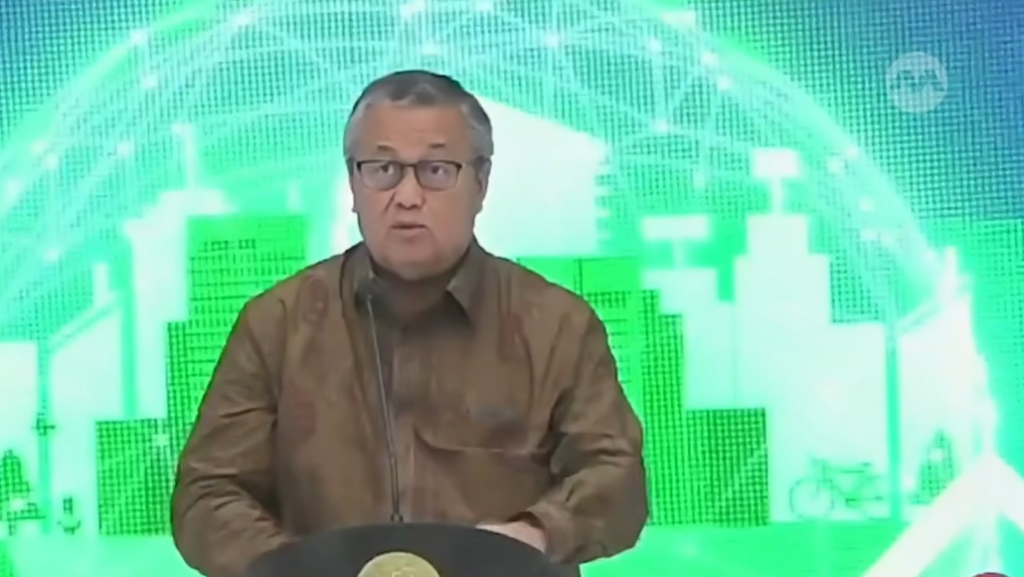
By 2019, things had changed again. The rupiah stabilized, inflation stayed low, and Perry started to loosen policy. He cut rates four times in the second half of the year, bringing the benchmark rate down to 5%. He said that each move was planned ahead of time to help growth before slowdowns got worse. Economists are still arguing about whether that was the right way to look at the situation, but the decisions were made with clear reasoning. Global Markets named him Asia-Pacific Governor of the Year in October of that year. This was because of how well he dealt with pressures that most outside observers didn’t see coming.
Then 2020 came along. Because of the COVID-19 pandemic, Bank Indonesia had to take steps to ease monetary policy that would have been unthinkable just two years ago. There were five cuts to the benchmark rate during the year, taking it from 5% to 3.75%. There will be one more cut to 3.5% in early 2021. Even tho it’s still not clear if the monetary response was perfectly calibrated, it was always clear which way it was going. Perry made a decision and talked about each step in public. His communication philosophy from 2018 was still very much in place.
His decision to step down in July 2026, about two years before the end of his second term, has a certain weight. The phrase “personal reasons” doesn’t answer anything and leaves the door open to a lot of possibilities. From the outside, it’s hard not to notice that the departure was sudden, without the smooth transition that usually happens when a central banker leaves. What exactly made them do it is still unknown, and it may have been personal. But the timing, which is so far from a natural endpoint, makes me wonder about things that may never have a satisfactory answer.
The Bank of Indonesia under Perry Warjiyo has made it thru a currency crisis, a pandemic, and years of global financial turmoil without the kind of collapse that has destroyed economies with similar levels of risk. That’s not nothing. In fact, it’s quite a bit. How history treats him may depend on what happens next in Indonesia and who steps into a role that, despite being technically difficult, turned out to need a very human kind of stability.
