

When the ground under western Colombia finally stopped being still on a Monday morning, it was still early. At 7:34 a.m. local time, an earthquake with a magnitude of 7.4 hit the Chocó region, with its epicenter near the small town of San José del Palmar. In some places, the shaking went on for almost 45 seconds. It takes a long time to worry about whether the building you’re in will stay up.
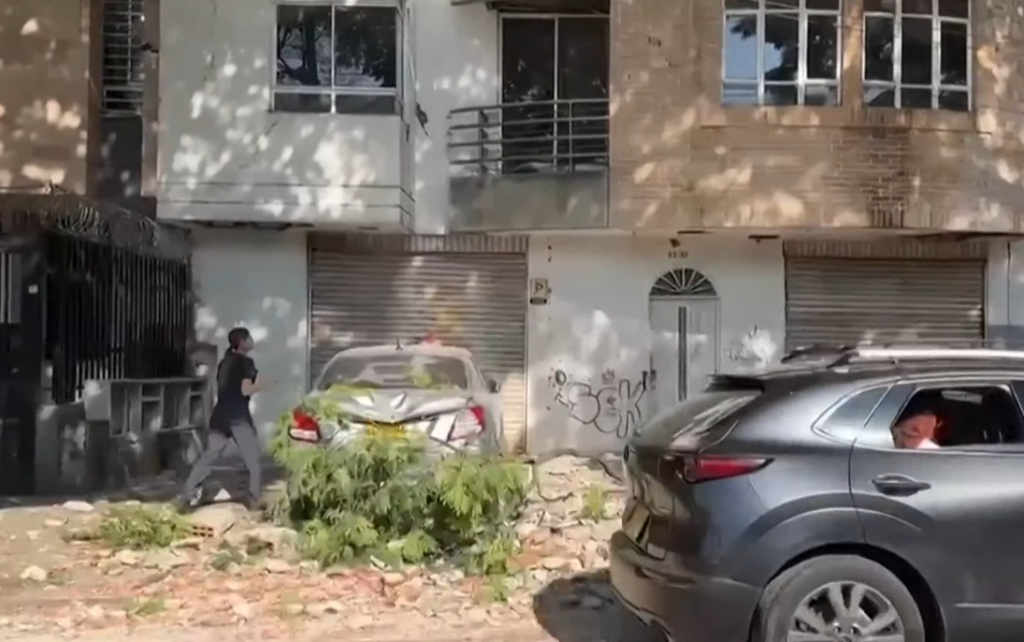
In many places, the dust had already settled, and at least 111 people were dead and dozens more were hurt. Officials confirmed that 61 buildings had completely fallen down. A lot of homes were damaged. It was bad at five airports. Eighteen roads were blocked. Most reports say it was the strongest earthquake Colombia has seen in more than ten years. It happened out of the blue on the first full workweek of a new president’s term.
The damage was clear and immediate in Pereira, which is about 55 kilometers from the epicenter and in the middle of Colombia’s coffee-growing region. It was seen on video by journalists that at least one building fell in Bolivar Square, which is the city’s main plaza. The fall created a thick wall of dust that spread across the open space. On Calle 8, a four-story apartment building shook and then fell apart. In less than an hour, emergency workers were going thru the rubble. The police chief in Pereira said that at least 47 people had died and that more than 60 or 70 buildings had fallen down.
There were waves in Manizales, which is about 150 kilometers from the epicenter. Journalist Luis Felipe Molina was in his 17-story apartment when they hit. He didn’t say they were a steady roll, but rather strong surges that came one after the other with a lot of force. “Only a few were left on the shelves,” he told BBC Mundo. “I have 450 books.” The city’s cathedral, which was built in Europe and wasn’t built to modern earthquake standards, somehow stood, tho one of its towers was clearly damaged. It likely tells us something about how strong the quake was that it held. Geologists call it a “interslab” event because it happened 107 kilometers below the surface. These events usually release energy at frequencies that damage buildings without always causing the worst damage to the surface. Tho that may not bring the families of the dead much comfort, it is likely that an even worse disaster was avoided.
Medellín also felt the quake, even tho it is farther from where it started. It was said that someone had died there. People poured into the streets. Reporters in Cali, Colombia’s third-largest city, say that by noon, at least 20 big buildings had fallen down. A piece of the University Hospital fell and trapped patients inside. People in uniform and firefighters were working to get to them. It’s still not clear how many were found. In these early hours, that feeling of not knowing lingers like the dust in CNN contributor Wilson Barco’s video of the Cali skyline from his apartment balcony. He went outside after the shaking stopped, said, “My God, that was really intense,” and kept filming.
At the exact moment of the earthquake, Abelardo de la Espriella had only been president of Colombia for three days. When he started his job last Friday, he promised to deal with crime and change the way taxes are calculated. On Monday, he was in Bogotá’s National Crisis Room with ministers and emergency workers, telling the country, “You are not alone.” It’s hard for any leader to deal with both their own political momentum and a sudden, huge humanitarian crisis at the same time. The question of whether the government’s response was enough will likely be talked about for weeks.
Quickly, help from around the world arrived. Ecuador sent 47 rescuers, as well as special dogs and other tools. El Salvador promised medical staff and supplies. France, Spain, Italy, and Ukraine all said they stood with them. The EU turned on its Copernicus satellite system to help with work on the ground. Shakira, a singer who was born in Barranquilla, wrote that people in Colombia “know how to come together.” It might be the most true thing anyone has said all day.
The number of deaths is still being added up. Because of this, the numbers we have now are probably not complete because roads to some of the worst-hit areas are still closed. In every disaster story, there comes a point where the numbers stop going up and the longer work of recovery starts. That time has not yet come for Colombia
| Field | Details |
|---|---|
| Headline | 111 Dead and Rising: Inside the Colombia Earthquake That Shook a Nation Awake |
| Topic | 7.4-magnitude earthquake in western Colombia, August 10, 2026 |
| Date of Event | Monday, August 10, 2026 |
| Epicenter | San José del Palmar, Chocó region, western Colombia |
| Magnitude | 7.4 (USGS confirmed) |
| Depth | 107 km (66 miles) |
| Death Toll | At least 111 confirmed dead |
| Injured | At least 87 people |
| Collapsed Buildings | 61 buildings collapsed; 1,575 homes damaged |
| Affected Cities | Pereira, Cali, Manizales, Medellín, Bogotá, Quibdó |
| Countries That Felt It | Colombia, Venezuela, Ecuador, Panama |
| Notable Damage | Manizales Cathedral tower damaged; hospital partially collapsed in Cali; 5 airports closed |
| Government Response | National emergency declared; Colombia’s new President de la Espriella convened emergency committee |
| International Response | Ecuador, El Salvador, Mexico, EU, France, Spain, Ukraine all pledged support |
| Context | Strongest earthquake to hit Colombia in over a decade |
| Word Count | ~620 words |
