

Telling a sitting president that he is mistaken comes with a certain kind of pressure. in public. repeatedly. on television in real time. Throughout the summer of 2020, Dr. Anthony Fauci found himself in the midst of one of the most bizarre medical disputes in contemporary American history—a struggle not only over a medication but also over who gets to define reality in an emergency.
The medication in question was hydroxychloroquine, also referred to as cloroquina in Spanish-speaking communities. It is an antimalarial drug that has been safely used for decades to treat ailments like rheumatoid arthritis and lupus. By March 2020, President Donald Trump had embraced it as a possible coronavirus remedy, endorsing it almost fifty times in tweets and press conferences and referring to it as a gift—almost a miracle. He even stated that, as a precaution, he was taking it himself.
It didn’t sit well with Fauci. The lack of data was the reason, not politics, though the politics could not be disregarded. He told CNN in May 2020 that the drug’s ineffectiveness was “quite evident” based on scientific evidence. He specifically cited randomized controlled trials, which are the type of studies that scientists genuinely trust, and pointed out that they repeatedly demonstrated that hydroxychloroquine was not beneficial for Covid-19 patients.
It’s worth pondering that distinction for a while. There is a distinction between a medication that has been shown to be ineffective and one that has not. Hydroxychloroquine entered that second category by July 2020. Speaking on MSNBC, Fauci was direct: all legitimate, well-designed clinical trials were pointing in the same direction, which was detrimental to the drug’s chances.
In the meantime, hydroxychloroquine’s emergency use authorization was revoked by the FDA due to concerns about “serious heart rhythm problems.” After an observational study published in The Lancet revealed increased mortality rates among patients who took the medication, the WHO halted its own investigation of the medication. These weren’t outlier discoveries published in obscure journals. These organizations established the standard for medical practice worldwide.
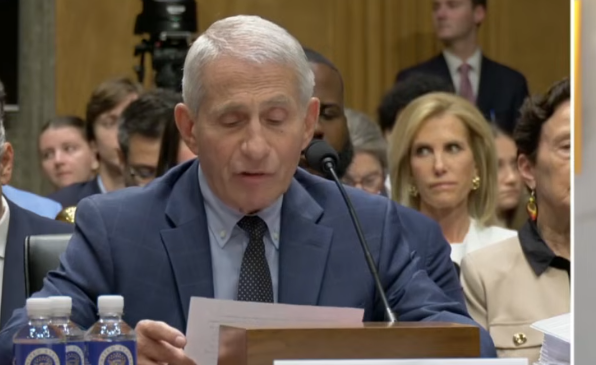
The episode was genuinely uncomfortable to watch because of how intimate it got. Trump implied that the rejection of hydroxychloroquine was solely due to his recommendation, as though the FDA, the WHO, and clinical researchers worldwide had orchestrated a spiteful campaign. A reality where the president of the United States views scientific consensus as a political attack is incredibly bizarre.
It wasn’t insignificant that Fauci maintained his position throughout. People tend to forget how uncommon that type of institutional resistance actually appears to be. He didn’t speak up. He didn’t take it personally. He repeatedly reiterated the same main points: trust the data, follow the science, and accept the results of the trials.
In retrospect, the hydroxychloroquine incident was actually about more than just one molecule. It was about what happens when political identity and public health collide, when a pill becomes a loyalty test rather than a medical question. It makes sense that in early 2020, millions of Americans were desperate for a solution. People seek certainty wherever they can because they are desperate.
The extent of the long-term harm that period caused to public confidence in healthcare institutions is still somewhat difficult to determine. Even though it was disputed at the time, Fauci’s persistent, if politically costly, insistence on evidence-based medicine left a documented record that has been largely confirmed by later research.
As Fauci maintained, the science
