

Some political stories are written only after they’ve already ended. Perhaps the story of Abdul El-Sayed is one of those. The 41-year-old doctor and epidemiologist ran a Democratic Senate primary in Michigan for several months while the party’s establishment subtly, and occasionally not so subtly, supported Representative Haley Stevens. Stevens was inundated with cash. Her column was filled with endorsements. Nevertheless, El-Sayed had the advantage when the votes were counted on the evening of August 4th, ultimately winning by about two percentage points.
It’s difficult to ignore the significance of that margin. It wasn’t a landslide. It wasn’t an anomaly, though. Almost 709,000 votes were cast for El-Sayed during a grueling, months-long campaign that featured ideological disagreements, personal attacks, and the kind of intra-party strife that usually leaves wounds. He was a progressive when he ran. He advocated for universal access to Medicare. His support for public ownership of AI caused controversy and garnered equal attention. Despite this, Michigan voted for him.
El-Sayed’s history deviates from the conventional political biography. He was trained as a doctor and epidemiologist after being born in 1984 to Egyptian immigrant parents. He led Wayne County’s Department of Health, Human, and Veterans Services after serving as director of the Detroit Health Department. In 2018, he ran for governor of Michigan, but Gretchen Whitmer defeated him in the Democratic primary. He was first exposed to a different kind of politics during that previous campaign, where it was just as important to show up in union halls and living rooms as it was to advertise on television. It appears to have taught him something.
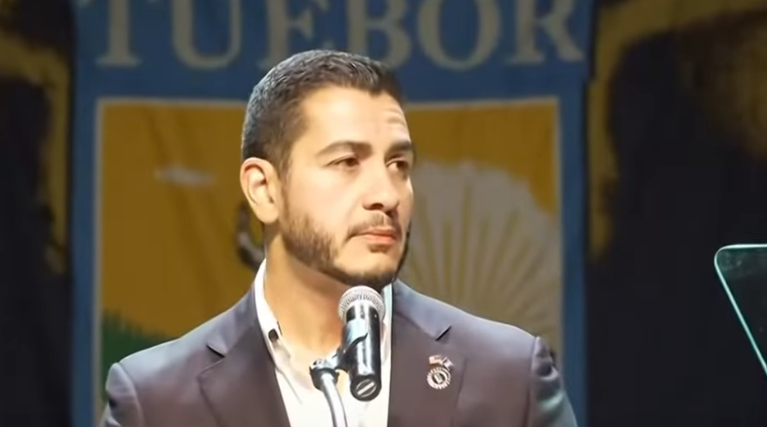
This cycle, he heavily relied on the same grassroots energy in his campaign. Thousands of people from all over the state called 1-844-ABDUL-4-U, a voter hotline. His social media presence, especially on Instagram and TikTok, allowed him to connect with audiences that more conventional candidates frequently find difficult to reach. Even though the party infrastructure wasn’t prepared to follow him there, there’s a feeling that El-Sayed understood something about where political engagement truly lives now based on how this campaign progressed.
The primary itself turned into a kind of proxy conflict over the Democratic Party’s course. The more circumspect, establishment-aligned wing was represented by Stevens. El-Sayed presented himself as a candidate who is prepared to speak candidly about what others discuss. Money out of politics, money into people’s pockets, and a healthcare system that doesn’t bankrupt families were his consistent framing. Whether you agree with the details or not, the message was coherent. In a crowded field, that coherence is important.
Shortly after the race was announced, El-Sayed received the endorsement of Michigan state Senator Mallory McMorrow, who had run her own Senate campaign before withdrawing a month prior to the primary. She made a clear point when she said that what separated Democrats from their Republican opponent in November was far more significant than what separated the candidates during the primary. In a race this close, McMorrow’s tens of thousands of votes were probably crucial.
Former Representative Mike Rogers, the Republican nominee, has experience in statewide elections. Sen. Elissa Slotkin defeated him in his 2024 bid for the same Senate seat. After Sen. Gary Peters decided not to run for reelection, he is making another attempt to fill the vacant seat. Rogers had months to position himself for the general election while Democrats were still at odds with one another because he ran unopposed in his primary.
El-Sayed would become the first Muslim senator in American history if he were to win in November. It’s important to take a moment to consider that fact, not to exaggerate its significance but to acknowledge it for what it is. That particular detail might influence some voters’ perceptions of him in the general election. It’s also possible that Michigan, a state with a sizable Muslim and Arab American population, finds that history more inspiring than disqualifying.
There is a real sprint to November. the main marks on the left. However, El-Sayed has previously been ruled out.
