

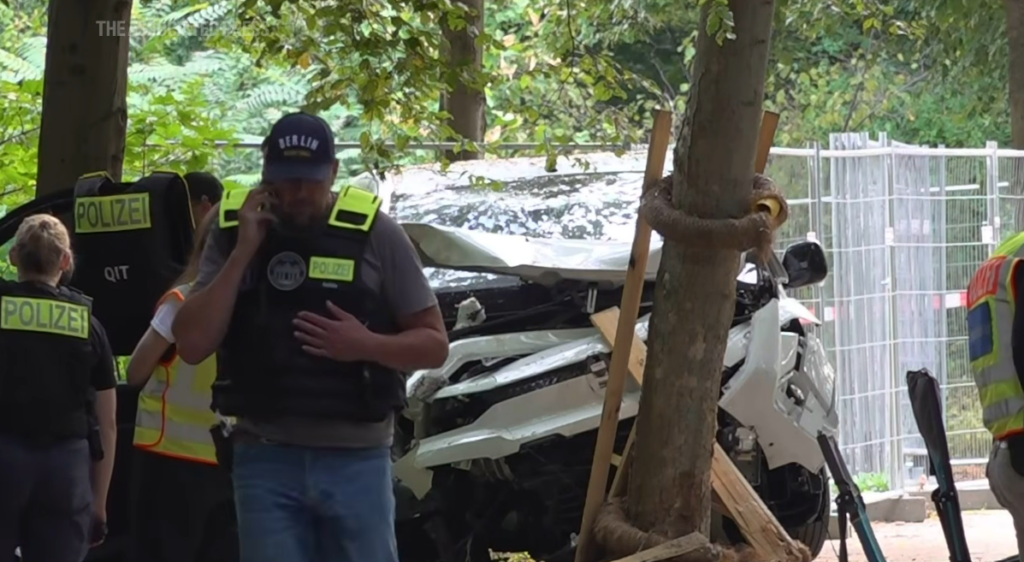
Berlin does summer nights better than almost anywhere else in Europe. On Saturday night in Tiergarten, hundreds of thousands of people were moving through the city, and floats and music played at one of the biggest Pride celebrations in Europe. The Christopher Street Day parade had been going on for hours without a hitch. Then, around 10 p.m., a rented delivery van hit a group of people on the Ahornsteig path near the Brandenburg Gate. A woman was killed. Twenty-nine others were hurt, and some were critically hurt.
It happened quickly. It’s now being called the Berlin Pride attack. After the van was hit, the suspect got out and was said to have continued attacking people with a machete before disappearing into the city. Over 2,200 police officers, who were already on duty that day to protect the parade, were called in to start a citywide manhunt that would last all night and into Sunday. Minister of the Interior of Germany Alexander Dobrindt named the suspect as Abdul Ballout, a 21-year-old German citizen with Lebanese roots who has been in a lot of trouble with the law and has ties to Islamist groups in Berlin.
Take a moment to think about that last part. Ballout wasn’t a secret. Because he failed to join ISIS, he had a criminal conviction for planning an act of violence and a suspended sentence. The fact that someone with that background was still in Berlin, on the radar of the police but not in custody, will be hard for officials to explain in the coming days. This is something Germany has thought about before. It’s still not clear why it keeps giving the same unpleasant answer.
Ballout was found on Sunday in Spandau, a western suburb of Berlin. The manhunt was over. He came at them with a knife. He was killed by police shots. Friedrich Merz, the chancellor, and Dobrindt, the interior minister, both promised a full investigation. Merz said the act would be “fully investigated and punished.”” It was “an attack on our free and cosmopolitan society,” as Berlin Mayor Kai Wegner said. This was a true statement that really hit home in the city’s long history as a safe place for people who disagree with the government.
From the news coverage of the vigil that happened in the square in front of the Brandenburg Gate on Sunday afternoon, it seemed like more than just the immediate loss was being mourned. At the scene, people left flowers and notes written by hand. Some people stood still on Unter den Linden. Berlin’s Pride is more than just a party; it’s the city’s public argument every year that being open is important. The attack was aimed at both the argument and the people in the crowd.
With the measured tone that comes after these kinds of events, security experts said that the van-ramming method fits a pattern that has been seen in Germany and Europe over the past ten years. This low-tech method is hard to stop without closing down all public areas, and it has been used many times at markets, parades, and other public events with terrible results. Even though there were 2,200 police officers there, the attack still happened. This will add to the ongoing discussion about what real prevention looks like, which rarely leads to satisfactory conclusions.
Germany is about to go through a political reckoning over immigration and security that started before Saturday night. This attack will make that conversation a lot more interesting. The question, which is still open, is whether it leads to useful policy changes or just more political noise. The vigil at Brandenburg Gate, the flowers along the path in Tiergarten, and one empty seat in Berlin are all that’s left for now.
