

On the evening of December 27, 2011, Betsy Faria was stabbed more than fifty-five times at a home on Sumac Drive in Troy, Missouri, a small Lincoln County town an hour northwest of St. Louis. She had been receiving chemotherapy for her terminal breast cancer all day. There was a kitchen knife with a serrated edge in her neck. After calling 911 at 9:40 p.m., her husband Russ was imprisoned for almost four years for her murder before his conviction was completely overturned in a second trial. Pamela Marie Hupp, the woman who allegedly drove Betsy home that night, received $150,000 in life insurance from her death, and used false testimony to help put Russ in jail, is already serving a life sentence for a different murder. For five years, Missouri has been attempting to convict her of killing Betsy. The trial was delayed once more in April 2026.
Through six Dateline NBC episodes, a podcast that topped the Apple charts for weeks, and a scripted NBC miniseries in 2022 starring Renée Zellweger in a fatsuit as Hupp, the case’s backstory has been told in great detail. The general outlines are familiar by now. The quiet accumulation of delays, venue changes, judicial substitutions, and legal maneuvers that have turned what should be a simple capital murder prosecution into a protracted multi-year ordeal with no trial date in sight is less often discussed.
The St. Charles County, Missouri trial date of August 3, 2026, which was already the result of years of back and forth, has been canceled. When defense lawyers revealed that Y-STR testing of objects from the crime scene, including the handle of the murder weapon, had revealed the presence of male DNA that does not match Russ Faria, a hearing before Judge Christopher McDonough in late March became tumultuous. McDonough recommended that the trial be postponed until 2028 and chastised the prosecutor’s office for delaying the defense’s access to DNA evidence. Then, McDonough withdrew from the case completely and vacated the August date after prosecutor Mike Wood asked for a new judge. In April 2026, Joseph Rathert was appointed as a new judge by the Missouri Supreme Court. A trial in 2026 is currently, at best, uncertain.
| Pam Hupp / Betsy Faria Case — Key Information | |
|---|---|
| Defendant | Pamela Marie Hupp (b. Oct. 10, 1958) — currently incarcerated at Chillicothe Correctional Center, Missouri |
| Current Conviction | Life without parole — murder of Louis Gumpenberger (shot Aug. 16, 2016, in O’Fallon, Missouri; Alford plea Aug. 2019) |
| New Charge | First-degree murder of Betsy Faria (stabbed 55+ times, Troy, Missouri, Dec. 27, 2011) |
| Charge Filed | July 12, 2021 (Lincoln County, Missouri); refiled March 2024 (St. Charles County) |
| Wrongful Conviction | Russ Faria (Betsy’s husband) convicted 2013; exonerated Nov. 2015; settled civil lawsuit for $2.05M (2020) |
| Motive (alleged) | Financial gain — Hupp was named sole beneficiary of Betsy’s $150,000 life insurance policy days before murder |
| March 2026 DNA Development | Y-STR testing of murder weapon handle found male DNA — does NOT match Russ Faria |
| Original Trial Date | August 3, 2026 — St. Charles, Missouri (vacated April 2026) |
| April 2026 Development | Judge Christopher McDonough removed himself; Missouri Supreme Court assigned Judge Joseph Rathert |
| Trial Outlook | 2026 trial now uncertain; possible delay until 2028 |
| Penalty Sought | Death penalty (prosecutor Mike Wood filed intent Feb. 2024; cited “depravity of mind”) |
| Media Coverage | 6 Dateline NBC episodes; NBC scripted series “The Thing About Pam” (2022) starring Renée Zellweger |
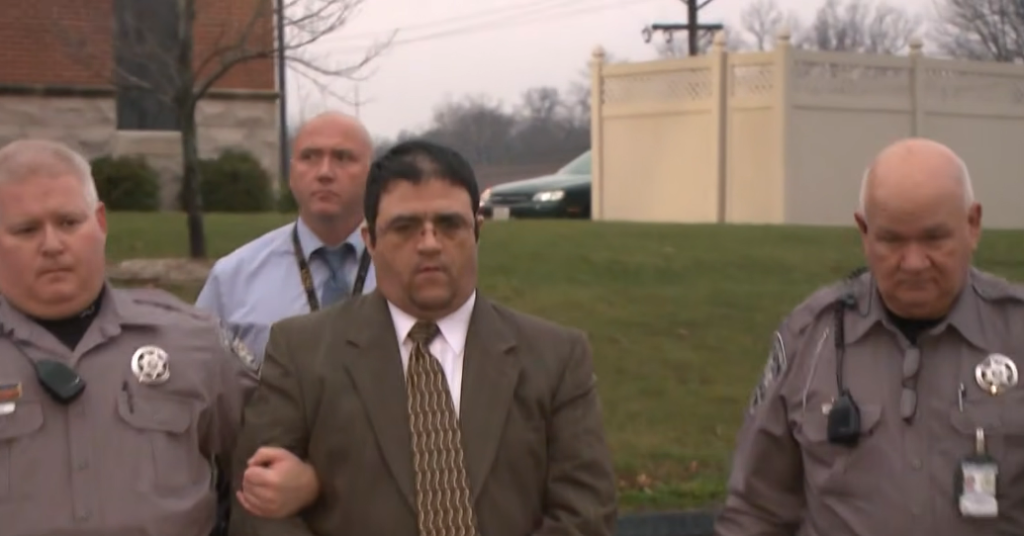
The detail that merits the greatest attention is the DNA discovery. The Y-STR test was ordered by Hupp’s defense lawyers, Steven Lewis and Tony Davidson, who discovered male genetic material on the murder weapon that rules out the man who was falsely convicted of using it. That is not the same as clearing Hupp; male DNA on a knife handle could have a variety of explanations. The prosecution will contend that it provides no conclusive evidence against Hupp, while the defense will contend that it raises reasonable doubt. However, this new development adds another layer of complexity to a prosecution that was already carrying a lot of weight in a case already marked by evidence problems: a detective charged with perjury for claiming crime scene photos never developed, a destruction order almost executed at the time of Russ’s acquittal, and the systematic exclusion of evidence implicating Hupp from the original trial.
When observing this case from the outside, it is truly challenging to determine how to feel. Before being found not guilty, Russ Faria was incarcerated for nearly four years. For years, his wife’s family thought he had murdered her. In 2021, the year Hupp was officially charged, Betsy’s daughters finally apologized to Russ. Leah Askey, the initial prosecutor, and Christina Mennemeyer, the initial trial judge, were both removed from office in 2018, at least in part due to the way the case was handled. Due to his testimony during Russ’s trial, a former detective is accused of perjury. Criminal charges may be brought against former sheriff’s deputies. Here, the system failed miserably over several years and on several levels. The trial for Betsy’s murder is still ongoing, and the woman at the center of it all is currently serving a life sentence at Chillicothe Correctional Center for shooting a disabled man she allegedly lured to her O’Fallon home in order to frame Russ.
The legal environment surrounding this case is extremely intricate. The prosecution has a strong case for Hupp’s motive, opportunity, and behavior in relation to Betsy’s death, and the charges against her are substantial. The issue is that managing a defendant who is already incarcerated for life while building a death penalty case across multiple venue transfers and evolving DNA evidence following a wrongful conviction that tainted the initial investigation is an exercise in procedural endurance that puts every level of the Missouri court system to the test. There will be new preparation time with a new judge. Before he left the case, McDonough was already thinking about the possibility of an outside jury pool, which would add logistical complexity and possibly delay the trial until 2027 or later.
In 2026, Missouri will host a number of other noteworthy criminal trials. The trial for the alleged serial killer from Kansas City, Fredrick Scott, is scheduled for August 31. The trial for Randall Fox, who is accused of double murder in Columbia, is scheduled for August 18. Investigative genetic genealogy has recently connected the Scherer killings, a 1998 cold case double murder in southeast Missouri, to Robert Eugene Brashers, a long-dead career criminal whose victim count has now grown to include victims in several states. These cases are progressing. Out of all of them, the Hupp case has garnered the most national attention, but it continues to stall. The daughters of Betsy Faria have been waiting for a decision for fifteen years. They might have to wait a lot longer given the current trajectory.
