Close Menu
Kbsd6Kbsd6
    Facebook X (Twitter) Instagram
    Facebook X (Twitter) Instagram
    Kbsd6Kbsd6
    Subscribe
    • Home
    • News
    • Trending
    • Kansas
    • Celebrities
    • About
    • Privacy Policy
    • Contact Us
    • Terms Of Service
    Kbsd6Kbsd6
    Home » The ‘Mandela Effect’: Why We Remember Things That Never Happened
    Health

    The ‘Mandela Effect’: Why We Remember Things That Never Happened

    Sierra FosterBy Sierra FosterFebruary 6, 2026No Comments4 Mins Read
    Facebook Twitter Pinterest LinkedIn Tumblr Email
    Share
    Facebook Twitter LinkedIn Pinterest Email

    Human memory is frequently idealized as a devoted archivist, a dusty library where each experience is captured on a brand-new reel of film and is just waiting to be viewed again. However, contemporary psychology contends that our minds are more like Wikipedia entries than archives—always being updated, vulnerable to vandalism, and sometimes altered by the consensus of strangers. The “Mandela Effect,” a phenomena where millions of individuals share a strong, detailed recall of something that simply never happened, is the clearest example of this fragility.

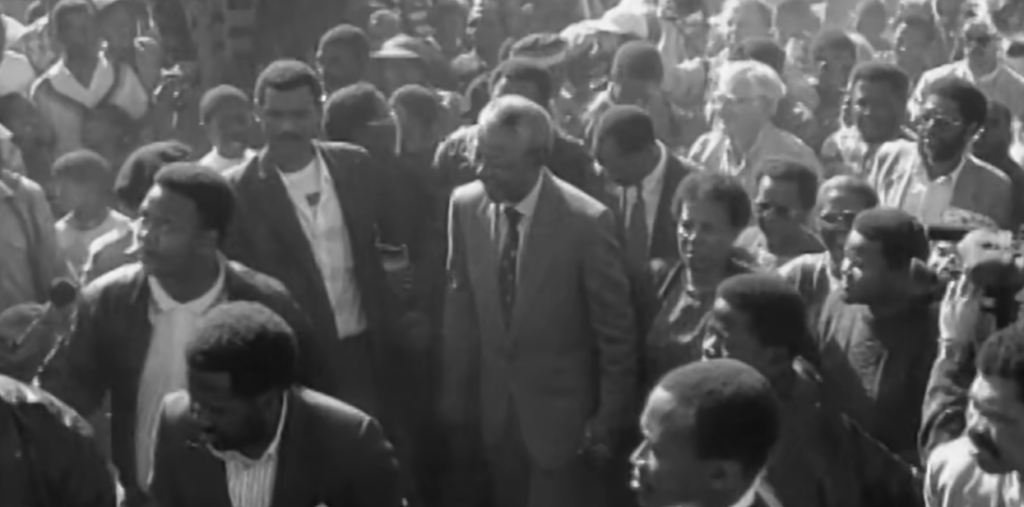
    Fiona Broome, a paranormal researcher, first used the word in 2009. She was shocked to learn that she and thousands of other people remembered Nelson Mandela’s death in jail in the 1980s. They might talk about his widow’s speech, the riots, and the funeral. Mandela was, in fact, still alive and well. He eventually became president of South Africa until dying in 2013. This was a collective delusion of history, not a straightforward mistake.

    The examples have since proliferated and are now commonplace in online culture. We firmly believe that the “Berenstein” Bears (it’s Berenstain) were the bears from the children’s books. The cornucopia, which never existed, is depicted in the Fruit of the Loom emblem. Darth Vader utters the words “Luke, I am your father” (in reality, he says, “No, I am your father”).

    FeatureDetails
    DefinitionA phenomenon where large groups share a consistent, vivid, but false memory.
    OriginCoined in 2009 by Fiona Broome after misremembering Nelson Mandela’s death.
    Psychological BasisFalse Memory, Confabulation, and Schema Theory (brain fills in gaps).
    Famous Examples“Luke, I am your father” (False) vs “No, I am your father” (True); Monopoly Man’s monocle (False).
    Role of InternetAccelerates misinformation and social reinforcement of false narratives.
    Alternative TheoryParallel Universes / Multiverse (scientifically unfalsifiable/unsupported).
    The ‘Mandela Effect’: Why We Remember Things That Never Happened
    The ‘Mandela Effect’: Why We Remember Things That Never Happened

    So why does our brain so strongly deceive us? The solution can be found in “schema theory.” Our brains are cognitive misers; they value speed above precision. Not every pixel in a memory is saved during storage. We store a sketch as a compressed file. Our brain uses “schemas”—mental blueprints of how things should appear—to fill in the blanks when we recall it. Our brain automatically pulls out a monocle whenever we think of the Monopoly Man, a wealthy, elderly capitalist from the early 20th century, because it makes sense that he should have one. We remember a tail that isn’t there since Curious George is a monkey and monkeys have tails. +1

    Observing a group of friends argue passionately about the color of Pikachu’s tail tip—half of them were willing to wager money that it was black—in a pub, I recently came to the realization that objective fact frequently loses the battle against a self-assured, collective narrative.

    The Mandela Effect is fueled by this “social reinforcement” phenomenon. These misleading recollections are amplified on the internet. Others comment, “validating” the memories, when someone posts about the “Shazaam” movie, which is a nonexistent film starring Sinbad. Because of this feedback cycle, the mistake seems more real than it actually is. This is a type of “collaborative confabulation,” in which we as a species deceive ourselves.

    The psychological explanation is much more realistic, albeit a little more unnerving, than the parallel universe or timeline shift theories that some ardent supporters hold onto, claiming that we have entered an alternate realm where Mandela lived. It demonstrates how shaky our hold on the past is. Our memories are reconstructive activities that are impacted by reasoning, persuasion, and the individuals in our immediate environment rather than being set recordings. The Mandela Effect is a characteristic of the human operating system and serves as a reminder that humans are storytellers who occasionally allow the narrative to override the facts. It is not a bug in the matrix.

    The ‘Mandela Effect’
    Share. Facebook Twitter Pinterest LinkedIn Tumblr Email
    Sierra Foster
    • Website

    Born in Kansas City, Sierra Foster writes about politics and serves as Senior Editor at kbsd6.com. She was raised paying attention to this city, not just living in it. Sierra has a strong, deep connection to Kansas City, from the neighborhoods east of Troost to the discussions that take place in the city hall halls. Sierra, who is presently enrolled at the University of Kansas to pursue a degree in Political Science, applies the rigor of academic study to her journalism. She writes about politics in Missouri and Kansas as someone who genuinely cares about what happens to the people in these communities—the policies that impact them, the leaders who represent them, and the civic forces influencing their futures—rather than as an outsider watching from a distance. Her editorial coverage encompasses state-level policy, local government, and the national political currents that permeate bi-state regional life. Whether it's a city council vote or a Senate race, she has a special gift for turning complex policy language into writing that feels urgent, relatable, and worthwhile. Sierra seldom sits still off the page. She claims that playing soccer on a regular basis has sharpened her instincts for political reporting because of the sport's teamwork, strategy, and requirement to read a changing game in real time. She's probably somewhere in Kansas City with her friends when she's not writing or on the pitch, discovering new reasons to adore a city she already knows so well.

    Related Posts

    The ‘Phantom Vibration Syndrome’: Why You Feel Your Phone Buzz When It Didn’t

    February 6, 2026

    Why Flamingos Stand on One Leg: The Physics Explained

    February 6, 2026

    Why You Should Never Kill a House Centipede

    February 6, 2026
    Leave A Reply Cancel Reply

    You must be logged in to post a comment.

    Science

    The ‘Phantom Vibration Syndrome’: Why You Feel Your Phone Buzz When It Didn’t

    By Sierra FosterFebruary 6, 20260

    A quick, rhythmic buzz on the thigh, a phantom notification that sends a jolt of…

    Why Flamingos Stand on One Leg: The Physics Explained

    February 6, 2026

    Why You Should Never Kill a House Centipede

    February 6, 2026

    The Loneliness Economy: Why Americans Are Paying for Professional Cuddlers and AI Friends

    February 6, 2026

    Lab-Grown Meat: USDA Approves Sale of Cultivated Chicken—Would You Eat Meat Grown in a Bioreactor?

    February 6, 2026

    Yellowstone’s Supervolcano: USGS Sensors Detect ‘Unprecedented’ Uplift in the Caldera, Prompting New Warning System Tests

    February 6, 2026

    The ‘Mandela Effect’: Why We Remember Things That Never Happened

    February 6, 2026

    The Secret Ingredient in McDonald’s Fries That Makes Them Addictive

    February 6, 2026

    Why You Should Never Use the Free USB Charging Stations at Airports

    February 6, 2026

    Why You Should Never Drink Water Immediately After Eating

    February 6, 2026
    Disclaimer

    KBSD6’s content, which includes financial and economic reporting, local government coverage, political news and analysis, and regional trending stories, is solely meant for general educational and informational purposes. Nothing on this website is intended to be legal, financial, investment, or political advice specific to your situation.

    KBSD6 consistently compiles and disseminates the most recent information, updates, and advancements from the fields of public policy, local and regional affairs, politics, and finance. When content contains opinions, commentary, or viewpoints from business executives, politicians, economists, analysts, or outside contributors, it is published exactly as it is and reflects the opinions of those people or organizations rather than KBSD6’s editorial stance.

    We strongly advise all readers to seek independent advice from a certified financial planner or qualified financial advisor before making any financial, investment, or economic decisions based only on information found on this website. Economic conditions, markets, and policies are all subject to change; your unique financial situation calls for individualized expert advice.

    Facebook X (Twitter) Instagram Pinterest
    • Home
    • News
    • Trending
    • Kansas
    • Celebrities
    • About
    • Privacy Policy
    • Contact Us
    • Terms Of Service
    © 2026 ThemeSphere. Designed by ThemeSphere.

    Type above and press Enter to search. Press Esc to cancel.