

When we gaze at the Moon, we frequently perceive a fossil—a gray, cratered reminder of a violent history that has been trapped in space. This lyrical sense was echoed for decades by the dominant scientific consensus: the Moon was a solid, unmoving center on a frigid rock that was geologically dead. However, there are instances where science just requires waiting for the data to be processed by the computers. This static picture has been upended by a ground-breaking re-analysis of seismic data gathered by Apollo astronauts over 50 years ago, which has shown a shockingly dynamic, partially molten, and chemically complicated lunar heart.
A dirty magnetic tape reel opens the story. Astronauts on Apollo missions 11 through 16 placed seismometers over the lunar surface between 1969 and 1972. They faithfully documented “moonquakes” until 1977, when they were turned off. The data was loud and fragmented at the time, and the technology of the 1970s was unable to see the faint signals coming from the deep interior because of the interference. In a stadium, it was like trying to hear a whisper.
Time travel to the 2020s. Using cutting-edge algorithms and significantly more powerful computers, a group of researchers cleaned up this old data. They discovered a distinct seismic signal that shows the Moon is not a solid rock. Rather, it has a unique, Earth-like internal structure: a fluid, molten outer core surrounded by a solid inner core with a radius of roughly 258 kilometers.
This inner core’s astounding density of over 7,822 kilograms per cubic meter strongly suggests that it is composed of iron, just like the center of our own planet. The “Giant Impact Hypothesis,” which holds that the Moon was formed from the remains of an eons-old collision between Earth and a protoplanet the size of Mars, is supported by this likeness. What the core is doing, rather than just what it is composed of, is the true surprise.
Key Factual Context: The Moon’s Interior Structure
| Feature | Key Finding |
| Inner Core | Solid, likely iron-rich, density ~7,822 kg/m³. Radius approx. 258 km. |
| Outer Core | Fluid/Molten, radius approx. 362 km. |
| Seismic Source | Re-analysis of data from Apollo 11, 12, 14, 15, and 16 (active 1969–1977). |
| Primary Insight | The Moon experiences active mantle overturn (material churning). |
| Technological Leap | Modern computing power allowed processing of “noisy” Apollo data previously unusable. |
| Key Reference | Phys.org / Nature Study (Arthur Briaud et al., 2023/2025) |
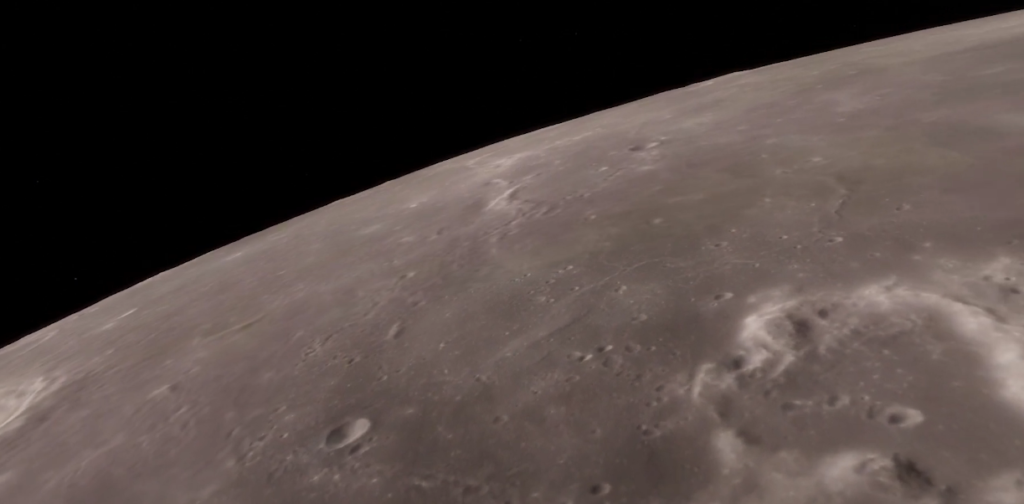
The data-driven models suggest a phenomena known as “mantle overturn.” Imagine a lava lamp inside the moon moving slowly. Lighter, hotter magma is driven upward, while denser material sinks toward the center. We detect some elements on the lunar surface that shouldn’t be there because of this vigorous churning; this planetary circulation system dredged them up from the deep. It compels us to reconsider the Moon as a body that is still settling, shifting, and changing on a geological timeframe rather than as a dead rock.
When I was younger, I watched a documentary on the Apollo missions and was amazed by the astronauts’ ability to bounce in low gravity. Little did I know that the ground beneath their boots was concealing a secret that would take fifty years to discover.
The riddle of the Moon’s old magnetic field can also be solved by the existence of a fluid outer layer. If the Moon didn’t have a dynamo—the churning of conductive fluids that creates a magnetic shield—traces of magnetism were found in rocks Apollo brought back. The Moon may have once had a magnetic field that was comparable to Earth’s, shielding its surface from the solar wind for millions of years before cooling down, according to this new evidence of a fluid core.
There are significant ramifications for further research. This information alters the mission parameters as NASA gets ready to launch humans back to the moon through the Artemis program. We are investigating a complicated planet with its own geophysics, not only stopping by a stepping stone. Comprehending the “lunar wobble” resulting from its fluid core facilitates accurate navigation and landing. Furthermore, constructing a permanent base becomes an engineering issue that must take into account “deep moonquakes” if the Moon is still seismically active, which is caused by the tidal stress of Earth’s gravity pulling on its fluid interior.
An accomplishment of archive science is the reanalysis of the Apollo data. It serves as a reminder that sometimes asking better questions of the answers we already have is just as important to discovery as building new rockets. Our peaceful nighttime buddy, the Moon, nevertheless has a lot to say.
