

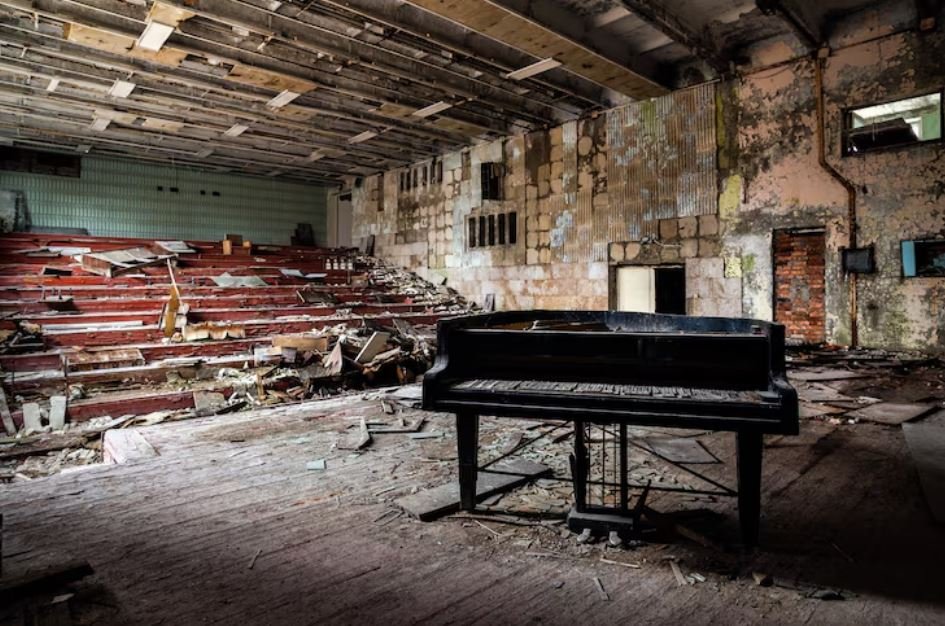
The red-brick shell of the historic Wareham Opera House stands with a kind of stubborn elegance at the edge of downtown Manhattan, Kansas. Constructed in 1880, it has witnessed silent films, musical performances, and numerous near-death stories. Longtime residents were perplexed by a recent rumor that claimed it was being converted into a church.
That is not the case. However, the explanation for the confusion reveals something truthful about how we associate buildings with memories and our hope that they will be given new life.
| Theater Name | Original Use | Current Status | New Purpose | Notes |
|---|---|---|---|---|
| Wareham Opera House | Live theater and film venue | Undergoing $40M renovation | Community arts and performance center | Historic building being revitalized as Wareham Hall, not becoming a church |
| AMC Seth Childs 12 | Commercial movie theater | Closed in 2018, now in use | Active Rock Hills Church campus | Taken over by church shortly after closure; repurposed for worship |
To be honest, what is taking place at Wareham is much more ambitious. This abandoned opera house is being converted into Wareham Hall, a multipurpose cultural venue with its sights firmly set on the future, through a $40 million renovation project that is already noticeably advanced in planning stages. Fixing the walls and changing the lighting isn’t the only goal. The goal is to completely revitalize the location.
The project, which is run by a nonprofit organization and supported by donations from the local community, aims to transform the space into a venue for live performances, movie screenings, educational activities, and public events. In late 2025, groundbreaking is anticipated. If funding continues as planned, the doors will reopen in 2027, this time to actors, musicians, poets, and neighbors rather than churchgoers.
Another theater is the source of the confusion regarding the church. After decades of operation, the 12-screen AMC Seth Childs 12 multiplex on the opposite side of town closed its doors in 2018. Rock Hills Church took over shortly after, converting the area into a place of worship. The building proved to be highly adaptable for contemporary congregational use, with its spacious lobby, plenty of parking, and tiered seating already in place.
The decision to modify pre-existing architecture without incurring the expense of starting from scratch was incredibly effective. Church services got underway on time. The community welcomed the change, which was subtle and useful.
Wareham, however, is unique. It is not a space that is easily flattened or transformed into a facility with a single use. Its balconies, creaks, curves, and obstinate acoustic character inspire admiration for the arts. It bears the emotional burden of recollection. Wareham is not a place you just walk into and forget what it was.
The planned renovation is especially significant because of this. By keeping the original woodwork, repairing the iconic marquee, and planning the performance area to accommodate both small and large-scale productions, organizers are embracing rather than erasing its past. The project feels especially creative for a town this size because it blends contemporary functionality with historical preservation.
When I walked by the building earlier this week, I saw the words “We’re coming back” written in marker on the makeshift plywood barrier. Three words that are incredibly effective at expressing the spirit of this revival, despite their uneven lettering.
The difference between the two theater conversions—Wareham becoming a performance hall and the AMC becoming a church—highlights a subtly potent aspect of public areas. There is now one to provide a sermon and a place of refuge. The purpose of the other is to exchange sound and stories.
Both are being purposefully revived in their own ways. However, only one of them ever had live orchestras accompanied by swaying chandeliers.
In addition to renovating a building, Wareham Hall’s development team is redefining a neighborhood’s relationship with public gathering by utilizing historical context and community investment. It’s an opportunity for students to exhibit. A venue for nonprofit organizations. A real stage for local artists.
And the act of keeping a theater this old feels like a victory worth celebrating in a time when small cities frequently watch their architectural history disappear under storage units or strip malls.
Seeing the plan advance without erasing its past is particularly heartening. The idea is based on authenticity rather than flattening the area into something generic or too polished; the stairway’s curve, the echo beneath the stage, and the wear are all preserved.
That kind of detail has an indisputable emotional appeal. Someone inquired about the return of the original stage curtain during a recent community open house. In response, a volunteer said that the rigging might survive even though the curtain itself might not. Surprisingly, there was a round of applause for that detail.
Manhattan is setting an example for other cities to follow through meticulous planning and innovative vision. It’s not necessary to rewrite spaces in order to reimagine them. It may entail paying respect to the past while repurposing it.
It will be difficult not to be thankful that someone thought this place was still worth preserving in the years to come, as new voices take the stage and old memories find new resonance. And for those who believed it might turn into a church—well, perhaps it was always a church in a different sense. A space for communion, but without pulpits and pews, but with chords and curtains.
