

The doors of a nearby Sparkasse store in Gelsenkirchen were closed and quiet on a gloomy morning a few days after Christmas. The only sound to break the silence was the chatter of patrons waiting impatiently at the curb for information regarding their misplaced treasures. The aftermath of what authorities are describing as one of the most ambitious bank vault incursions in recent memory lingered palpably, despite the strange scene in a city more used to industrial rhythm than unexpected crime drama. An estimated €30 million in losses resulted from the actions of unidentified criminals who drilled through reinforced concrete into a room containing over 3,000 safety deposit boxes over the course of a lengthy vacation weekend. The approach was unrelenting, and the results were very human.
The operation, which went well beyond the usual smash-and-grab break-ins that garner attention for a week before fading, was described as methodical and well-organized by local police and forensic specialists. The usage of large machinery inside a secure building during periods of comparatively little activity when the majority of employees and clients were away on holidays indicated meticulous preparation and assurance in their performance. It was similar to witnessing a swarm of bees abruptly tunnel into the side of a hive and emerge without its honey; their extraction was exact, well-coordinated, and startlingly effective. However, the wider ramifications went beyond the specifics of how the breach was carried out.
On that chilly Tuesday morning, those milling about voiced a mix of shock and surprise, not at the crooks’ cunning but rather at the vulnerability shown in a location that many believed to be extremely secure. Some carried folders filled with records for the valuable items they once thought were securely hidden behind concrete and heavy steel. Their facial expressions, which alternated between strained displeasure and quiet hope, implied that the emotional toll was more complex than just monetary loss; it involved temporarily damaged dignity and unsettled trust.
| Event | Details |
|---|---|
| What Happened | A bank vault was broken into via drilling |
| Where | Sparkasse branch, Gelsenkirchen, Germany |
| When | Discovered early morning, 29 December 2025 |
| Estimated Loss | Around €30 million (cash, gold, jewelry) |
| Number of Safe Deposit Boxes Looted | More than 3,000 |
| Number of Affected Customers | Around 2,500–2,700 |
| Current Status | Investigation & manhunt ongoing |
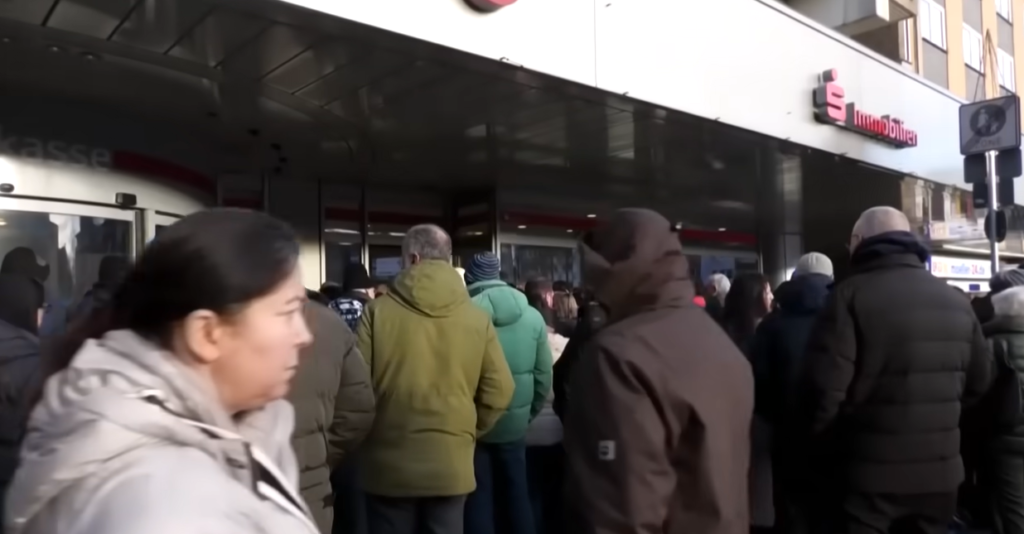
Citing significant structural damage and the necessity to safeguard customer interests and data while insurance evaluations and forensic investigations proceeded, bank officials had closed the location indefinitely. They had set up a customer hotline and were working quickly with adjusters to determine the best possible results. Many people who were standing outside, their nets of anxiety gradually thinning as they spoke with bank officials, found comfort in the fact that these contacts were taking place, calmly, and with regular updates. The hasty rush to deliver straightforward information had a calming effect, greatly lowering uncertainty and the possibility that rumors might heighten anxieties.
According to witness testimonies, late on Saturday night, a number of individuals were seen carrying heavy suitcases. Their calm demeanor suggested that the break-in was planned rather than unplanned. An Audi RS-6 with a temporarily stolen license plate was seen leaving the parking garage area in the early hours of the morning, according to surveillance footage. This fact has since been crucial to investigative leads. Even if the procedure is still in its early stages, police are currently searching local businesses and citizens for additional footage, which is indicative of an increasingly planned and resolute response from the authorities. Compared to previous episodes where leads cooled off quickly after the initial reports, the strategy feels noticeably better.
Many impacted consumers found that dealing with the administrative tangle of claims and recovery was more difficult than just remembering what had been lost, such as sentimental items that insurance could never replace, wealth amassed over a lifetime, and gold heirlooms handed down through the generations. As he told his tale, one elderly guy brushed the ends of his tattered jacket and compared his safe deposit box to a time capsule of family history, filled with objects of great personal worth but no obvious monetary value. His calm but apprehensive tone perfectly captured the depths of grief that went beyond money.
Rather than being chaotic, there were times when the waiting group seemed comfortingly united. Speaking to each other as if supporting a neighbor, strangers discreetly exchanged information and exchanged phone numbers for insurance companies or attorneys. While standing close by, several checked up on older couples and gently directed them to the bank’s recently launched help line. There was a remarkably similar trend in that quiet exchange: rather of retreating into individual panic, people turned to one another for comfort. It served as a reminder that, despite the braquage’s disruptive mechanics, society had not fallen apart as a result.
After overcoming their initial shock, a small group started creating a list of questions to submit to bank officials as a whole. These questions included deadlines for retrieving box content, clarification on compensation procedures, and security measures intended to avoid future occurrences. The image of a group of people gathered over scrawled notes was not spectacular, but it was purposefully optimistic; it was a positive response to disturbance that highlighted a community’s preference for problem-solving versus immobility.
When questioned about the startling scope of the breach, the experts who were brought in to provide advice on the security breach expressed a mixture of frustration and hope. They admitted that the criminals’ tactics revealed reasonable flaws in the physical infrastructure and holiday monitoring systems. Simultaneously, they highlighted solutions that are already being considered, such as rules for staggered physical patrols even on public holidays, layered sensing technologies that might identify intrusive sounds like drilling, and improved remote monitoring that stays active even during prolonged closures. These answers weren’t theoretical; rather, they were useful, doable, and probably going to set a new benchmark for similar institutions in the area.
There was quiet but contemplative conversation about adaptability and resilience back outside the closed Sparkasse branch. While such a breach was disconcerting, some said it also brought to light a more general point that is rarely discussed: that risk is constantly evolving and that institutions need to learn from every problem in order to remain ahead of it. They discussed more than just assigning guilt; they also discussed how to create better systems, how to update protections without making them onerous, and how to actively preserve common areas of trust rather than assuming them.
A certain amount of confidence appeared to calm annoyance when it was announced that a manhunt was still underway for the accused. The public was reassured by police that leads were being pursued in several areas, forensic teams were examining all of the evidence, and cooperation with other agencies was very creative. Given the meticulous documentation maintained by numerous branch systems that survived, there was a pervasive sense that the movements of the criminals would ultimately come to light under intense investigation pressure.
Customers were reminded by the bank’s outreach initiatives, which included sympathetic communication and organized claims help, that institutional support is still crucial, particularly when people experience losses connected to their personal experiences. Through careful handling, what could have been an anxious scramble seemed incredibly effective in minimizing distress where it could. Conversations heard in queues seeking help were not dejected or gloomy; rather, they were forward-looking and pragmatic, as if people were prepared to move past the upheaval rather than wallow in fear.
