

On a hectic Friday night, it’s difficult to forget the coziness of a warm Outback Steakhouse booth, the aroma of grilled sirloin filling the air, and a Bloomin’ Onion shared with friends. However, diners throughout America have found that recollection to be more bittersweet in recent weeks. Twenty-one Outback locations have closed, several of them unexpectedly, indicating a dramatic but intentional shift in Bloomin’ Brands’ strategy for the future of casual dining.
By closing underperforming locations from Baton Rouge to Long Island, the corporation is redefining the overall experience rather than merely cutting staff. With a very calculated $75 million investment, it plans to update the other facilities with new layouts, takeout-only kitchens, lighter interiors, and a more condensed menu. The objective is really clear: to become extremely efficient in a market that has gotten more digital and intensely competitive.
The days of casual dining using only bread baskets and large booths are long gone. Today’s diners place a high value on customization, timeliness, and price. By adjusting to that change, Outback is placing a wager that leaner operations would boost profits while also reestablishing its brand identity, which CEO Mike Spanos claims still has “incredible equity.”
I recently passed the Merrick, New York, area while driving. Once full, the parking lot was strangely silent. The restaurant was permanently closed, as patrons were told with a taped sign on the glass door. There were still salt shakers on cleared tables inside. That silent picture says a lot. It’s more than simply a restaurant that has disappeared; for innumerable couples, families, and coworkers, it’s a regular aspect of their lives.
Key Facts About Outback Steakhouse Restaurant Closures
| Item | Detail |
|---|---|
| Parent Company | Bloomin’ Brands |
| Total US Closures (Oct 2025) | 21 Outback locations |
| Additional Future Closures | 22 more across Outback, Carrabba’s, and Bonefish Grill (by 2029) |
| Total Remaining Outbacks (US) | Approx. 670 |
| Reason for Closures | Part of $75M turnaround strategy amid competition and flat growth |
| Other Brands Affected | Carrabba’s Italian Grill, Bonefish Grill |
| Notable States with Closures | Florida, Alabama, New York, Wisconsin, Louisiana, Maryland |
| Stock Value Impact (2025) | Bloomin’ Brands stock down 40% YTD |
| CEO Statement | “Outback Steakhouse has incredible brand equity.” – Mike Spanos |
| Source | https://www.cnn.com/2025/11/06/business/outback-steakhouse-closures |
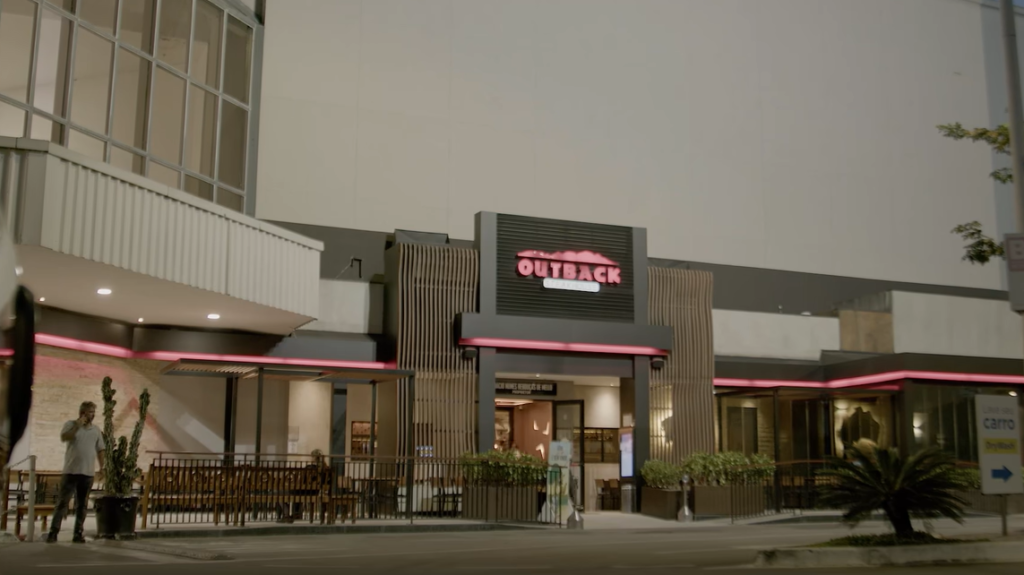
This action is especially significant because the brand is willing to face painful realities. While rivals such as LongHorn and Texas Roadhouse are reporting significant increases in same-store sales, Outback has found it difficult to keep up. The closures show a methodical commitment to eliminating waste and focusing on what is effective.
The company hopes to provide diners with a crisper, more unique experience by reducing operations and freeing up resources. More accessible layouts, redesigned bars, and a fresh focus on the brand’s signature cuisine are all features of the remodeled restaurants. Although steak is still the most popular item on the menu, the kitchen will now be set up to manage higher delivery volumes and quicker prep times.
This change is about perception rather than merely technology or location. The once-lighthearted Australian motif of Outback is being redesigned to appeal to younger, time-pressed, and health-conscious visitors. Some people may feel as though they are losing a part of their nostalgia. Others, particularly younger generations, however, could find the revised format shockingly modern and reasonably priced.
Delivery applications have changed the restaurant industry’s landscape within the last ten years. Many chains are adjusting since fewer people are dining in restaurants and more people are eating at home. Similar challenges are being faced by Applebee’s, Chili’s, and others. Outback is following a trend that prioritizes flexibility above footprint by making the audacious decision to close certain doors in order to open new ones.
It is important to note that Bloomin’ Brands is not completely pulling back. They continue to run more than 350 Outback outlets overseas and more than 670 sites nationwide. Their mentality is shifting to one of strength rather than numbers. This way of thinking takes into account cultural changes in eating, spending, and socializing in addition to economic influences.
The changeover has been obviously disruptive for employees at the impacted locations. Many received transfer offers, but moving isn’t always feasible. In Milwaukee, a bartender from Madison might not be able to start anew. Bloomin’ Brands has however made it clear that it is working to retain as much talent as possible through internal mobility and new opportunities.
The company’s executives think this change will lead to a better future. Each renovated restaurant will serve as a prototype for the new Outback experience, and renovations will continue through 2028. Through improving speed, modernizing the design, and improving the food, the business hopes to entice customers who may have wandered back.
What’s especially creative is how Outback is rethinking its actual location—not just as a dining place, but as a combination of digital convenience, sit-down, and takeout. With the use of integrated technology, staff training, and a small kitchen design, the company hopes to offer meals more reliably, quickly, and hotter than before.
This is similar to spring cleaning in many respects for restaurants: removing items that are no longer relevant to the objective, retaining what is most important, and rebuilding with clarity. Even if the closures were sudden, they might prove to be a very successful move in the direction of long-term sustainability.
Therefore, there’s cause for optimism even though it may hurt to see familiar places go dark. By prioritizing quality over quantity, Outback may be able to improve its dining model, sharpen its brand, and rebuild its relationship with a clientele that is ready for reliable, filling meals, whether they are consumed at home on the sofa or at a booth.
After all, a steakhouse is about how you make people feel, not simply about steak. In that sense, Outback’s upcoming chapter may be its most significant to date.
