

I knew something had changed when I watched it glide above the olive trees. The long, dry light of a warmer Adriatic had silently brought back the Oriental hornet, a summertime memory long since forgotten. This was a real-time ecological remembrance rather than nostalgia.
From Split, Solin, and the arid nooks and crannies of Kaňela’s stone quarries, confirmed sightings started to appear. After that, Novigrad appeared, nestled among the folds of Istria, where pine trees and vineyards now serve as hornet lookout locations. Just after midday, when the sun was high and the shadows hardly moved, I recall hearing a slight buzz. It didn’t seem arbitrary. It seemed incredibly intentional.
There is nothing alien about this species. At least historically, it belongs here. However, after a silent disappearance of almost 60 years, it has returned, indicating new ecological rhythms and changing temperatures. The way the Oriental hornet interacts with its surroundings is really unusual. In contrast to most wasps, it uses specific pigments in its cuticle to transform sunlight into energy. Because of its characteristic, it can flourish when other species retreat during the hottest parts of the day. That is the pinnacle of biological engineering, not science fiction.
Its arrival evokes conflicting feelings in gardeners and beekeepers. I was informed by a Solin apiarist that she had begun to keep a sting kit by her smoker. “I recall my grandmother using a cloth to swat them away. I have to tell my children to just leave them alone now,” she remarked. Her composure, despite a hint of anxiety, highlighted the intricate role these hornets play as both returning agents of change and predators.
Through the promotion of citizen science on websites such as iNaturalist and BioAtlas, Croatia has subtly established a very effective early-warning system. The fact that these tools make it quite simple for regular people—hikers, farmers, and students—to record sightings is especially helpful. The approach fosters public trust in addition to data collection. It encourages involvement rather than panic.
| Fact | Detail |
|---|---|
| Species | Oriental hornet (Vespa orientalis) |
| First Reappearance (2025) | Split, Kaštela, Solin, Novigrad (Istria), Croatia |
| Last Documented Presence | 1963 (sporadic until 2010, last seen on Krk island) |
| Risk Factors | Painful sting, allergic reactions, threat to honeybee populations |
| Not Technically Invasive | Native to the region, but long absent and ecologically disruptive |
| Activity Peak | Daylight hours (especially midday), tied to solar absorption ability |
| Unique Feature | Converts sunlight into energy (“biological photovoltaics”) |
| Public Response | Citizen reporting via iNaturalist & BioAtlas; education campaigns |
| Official Advice | Avoid nests; do not provoke; seek medical help if stung |
| Source | Croatia Week |
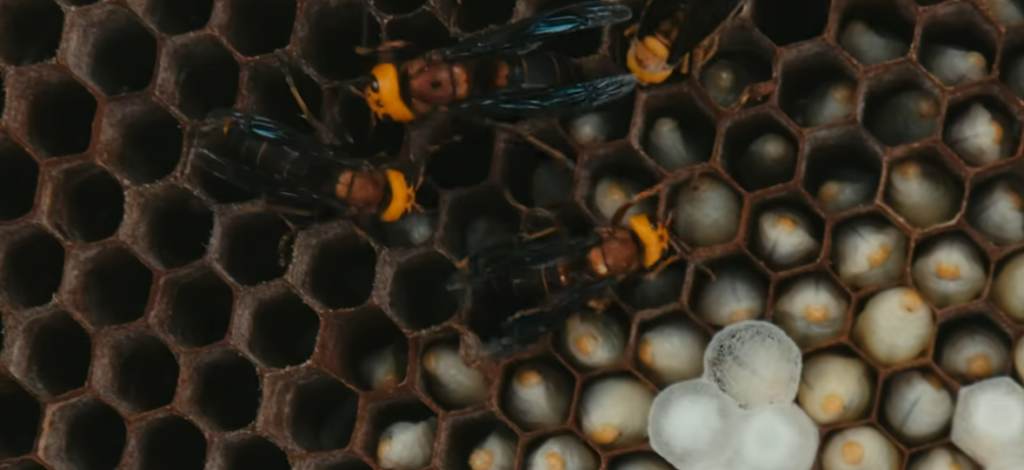
Health officials have adopted a pragmatic stance. Instead of initiating expensive extermination efforts, they have released reasonable recommendations: do not disturb nests, report stings, and seek medical attention if symptoms worsen. This response is very apparent; it aims to minimize damage while honoring the insect’s inherent function. It embodies a contemporary philosophy of coexistence where feasible and control just when required.
Instead of being afraid of the hornet’s return, Croatia has positioned itself to benefit from it through strategic planning. Municipalities have placed adrenaline pens in community health clinics, and some areas have started incorporating hornet knowledge into science curricula in schools. When a visitor discovers one close to a walking track, even tourism agencies have discreetly trained personnel on what to say. Public safety is being ensured without the use of sensationalism because to this extraordinarily efficient collaboration.
Croatia’s summers have gotten longer and drier during the last ten years. These circumstances are quite comparable to those found in areas where Vespa orientalis has historically flourished. The ecological window appears to have reopened—naturally, slowly, and without much fanfare—but no one reason can account for its comeback.
In addition to the hornet, I’m also intrigued by our reactions. Involving the public in the tracking of a species is a particularly creative approach. It makes conservation seem democratic and approachable. Additionally, it shows how adaptable local ecosystems are, even after being absent for decades.
It is impossible to ignore the hornet’s presence. It has a strong sting. It has a major impact on bee numbers. However, its reappearance also serves as a reminder that ecosystems are not forgetful; rather, they simply rest until the ideal circumstances arise once more. It is very poignant to consider that nature quietly and accurately rewrites itself. It somehow completes a biological sentence that we were unaware was incomplete.
I saw a hornet momentarily land on a sun-drenched rock in Istria one sunny afternoon, just beyond a vineyard wall. It did exactly what it had evolved to do—it sat motionless and absorbed light. I stayed put. I simply watched. It was grounded in the past and purpose, yet it wasn’t menacing.
